Aravaipa, Arizona – late November 2025
My daughter said, “We’ll meet you at the ranger station outside the wilderness area. We have a 3-day permit to hike the canyon over Thanksgiving.”
And so my husband and I (me in my early 70s and he right behind me) – wondered if we could still strap a backpack on our backs, hike through the desert with possibly no trails, slosh back and forth through a river (who knows how deep), pitch our (rather heavy) tent, and camp in temperatures that might range from mid-30s to mid-70s – AND keep up with a couple of energetic grandkids, ages 5 and 7, already seasoned hikers and climbers. We bought waterproof socks, a lightweight sleeping bag for me and new trekking poles for him, and an assortment of interesting freeze-dried foods. By some miracle (we were coming from Washington State and they from New Mexico), we all met at the trailhead right on time, and off we adventured, hoping to spot javelinas, coatimundis, and interesting lizards (I was not as excited to see scorpions, rattlesnakes, and tarantulas…).
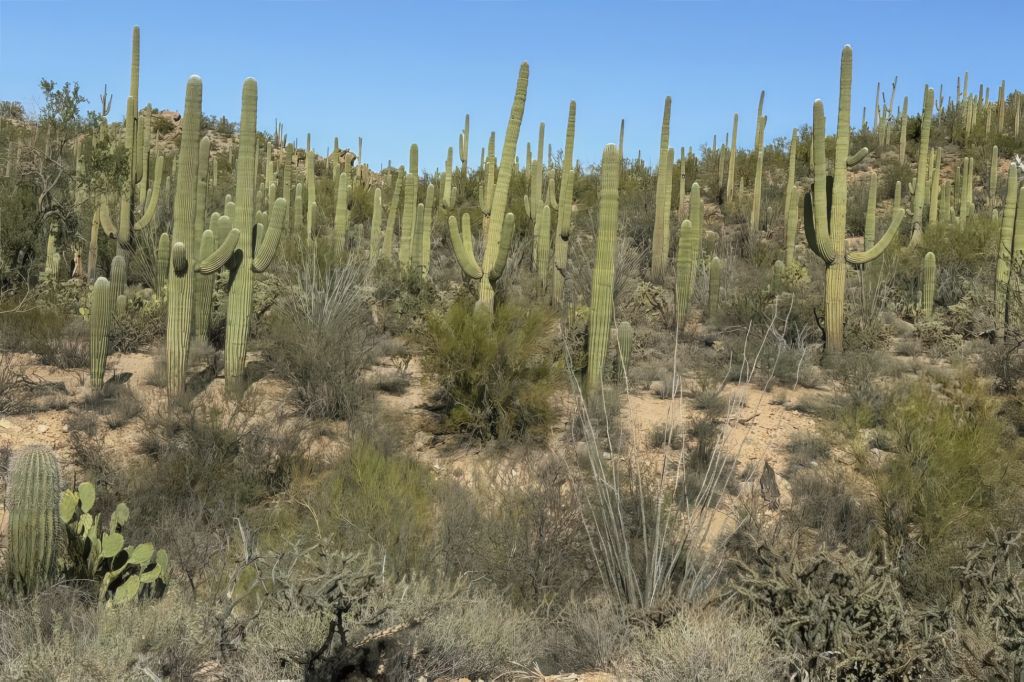
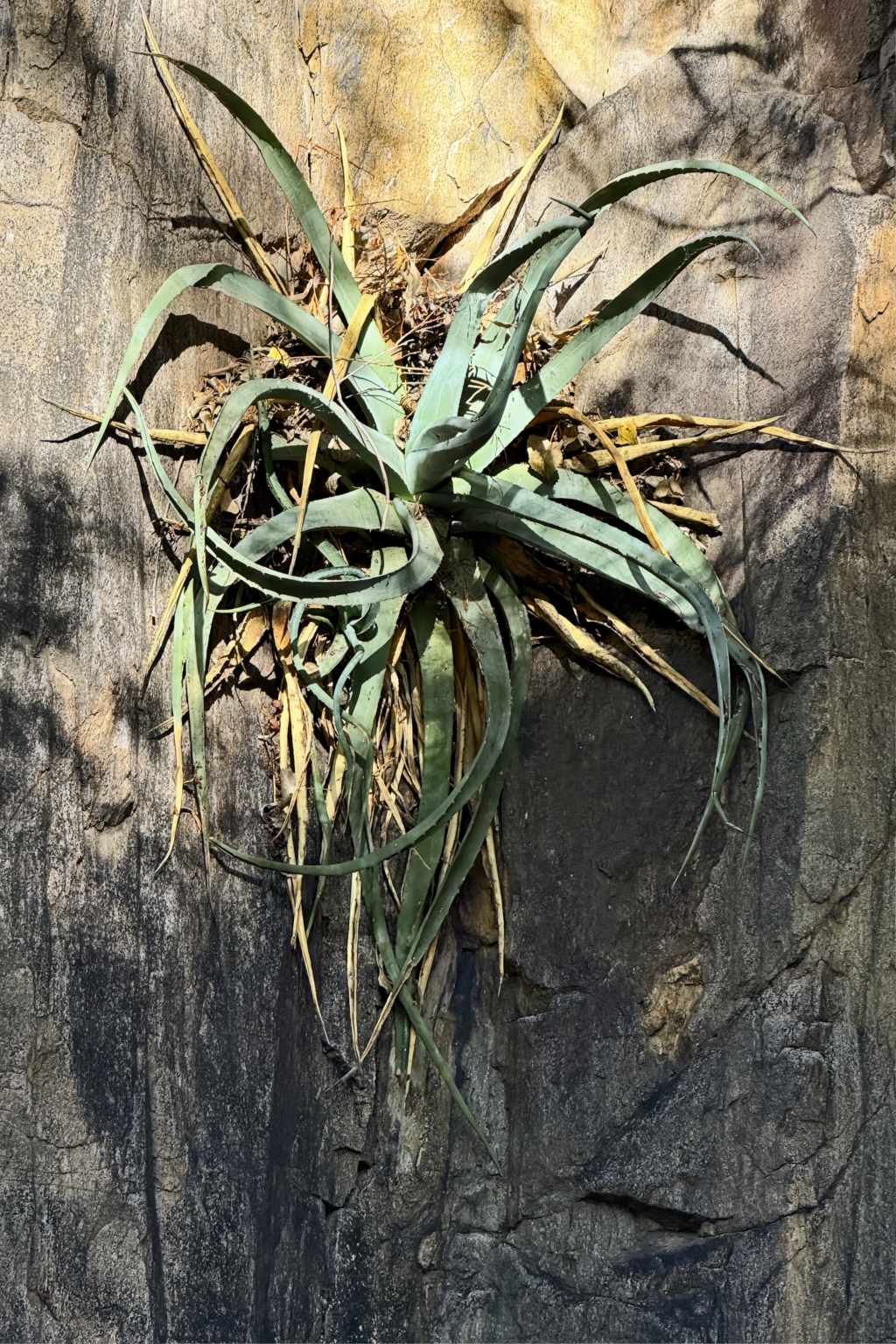
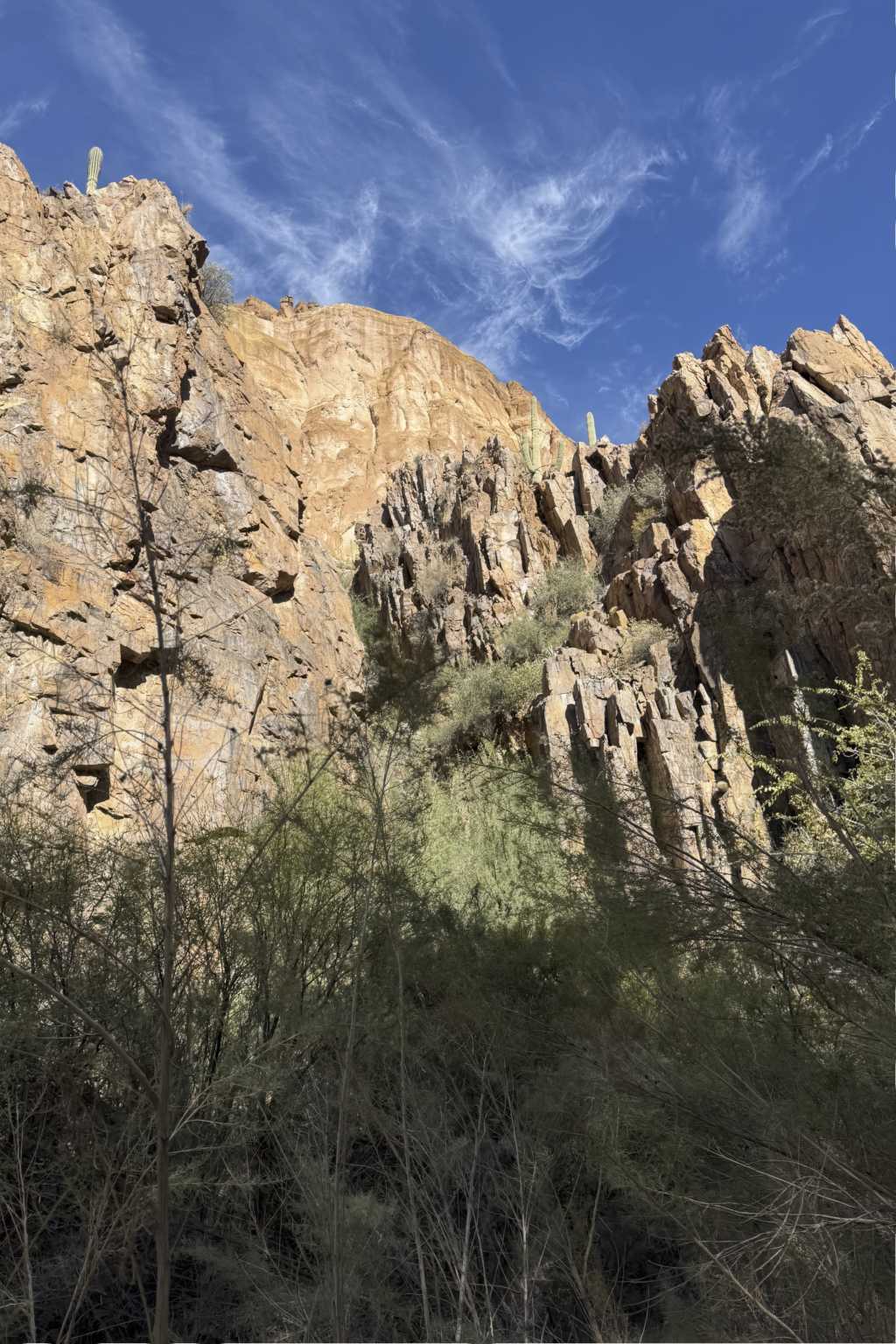
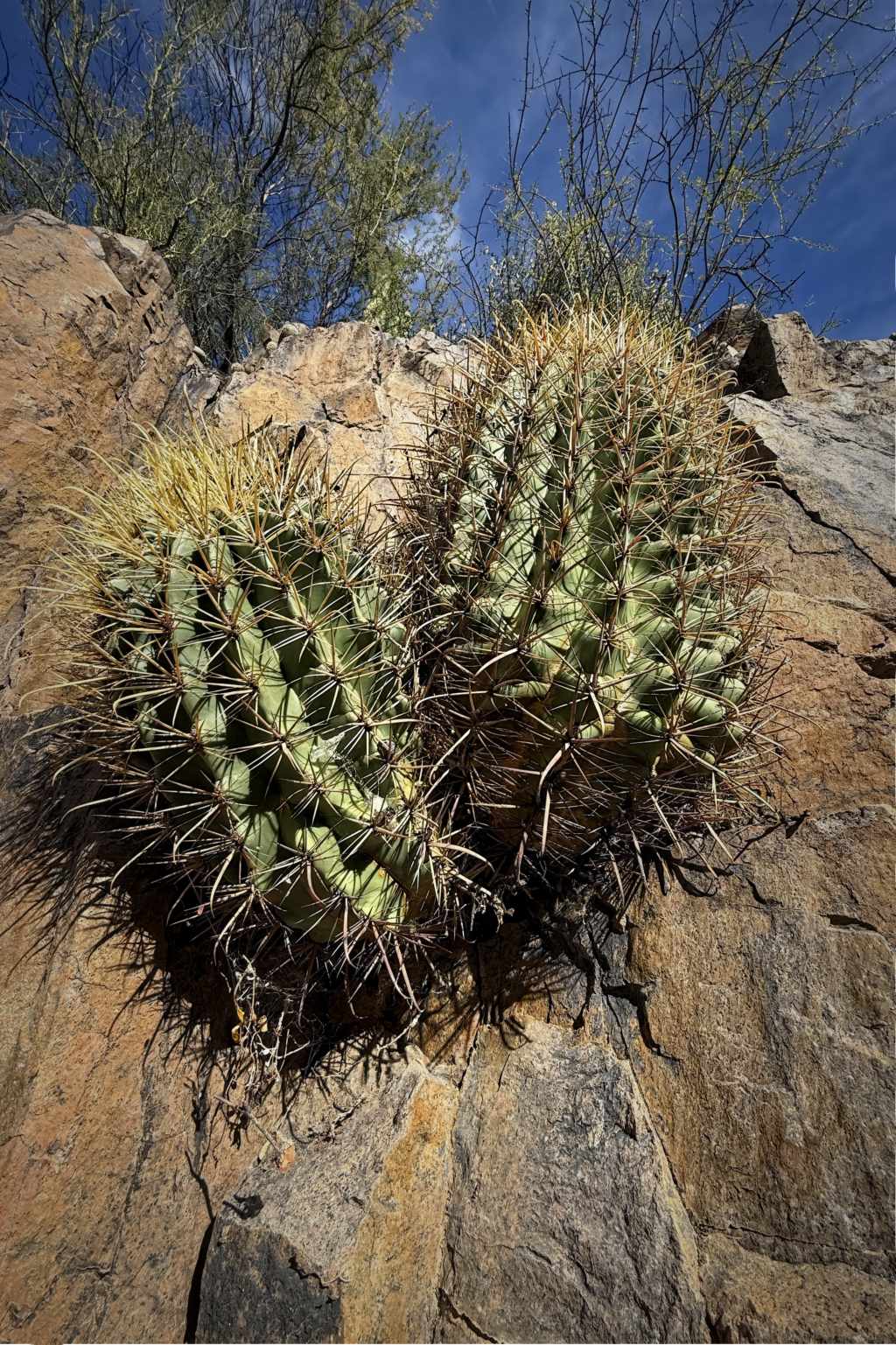
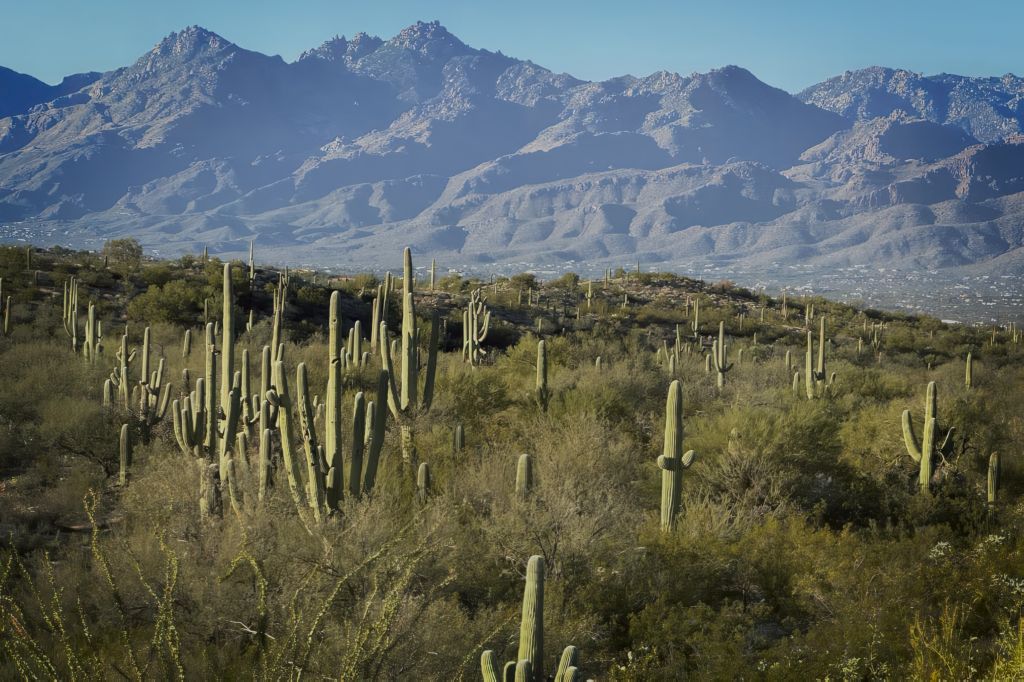
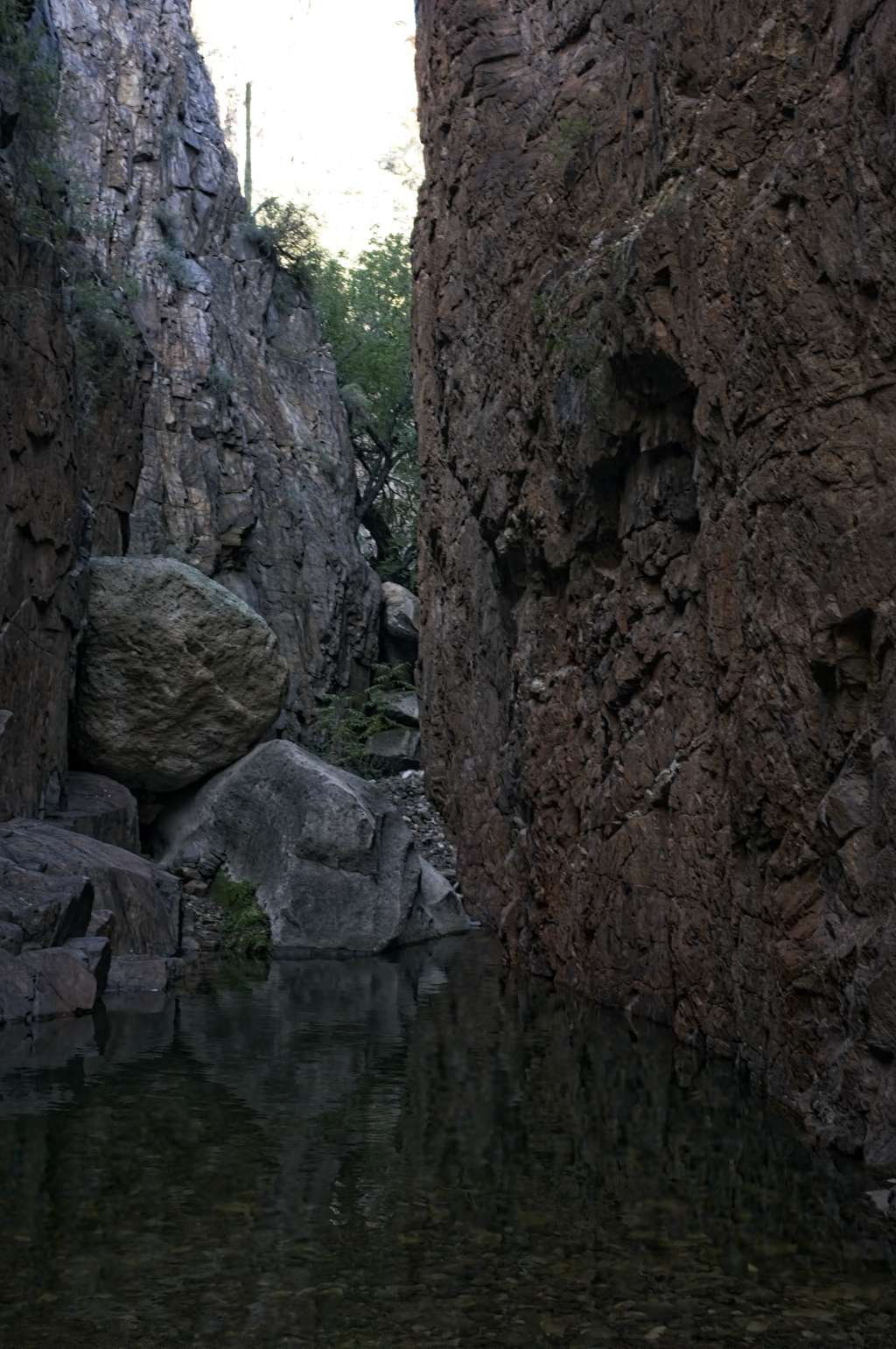
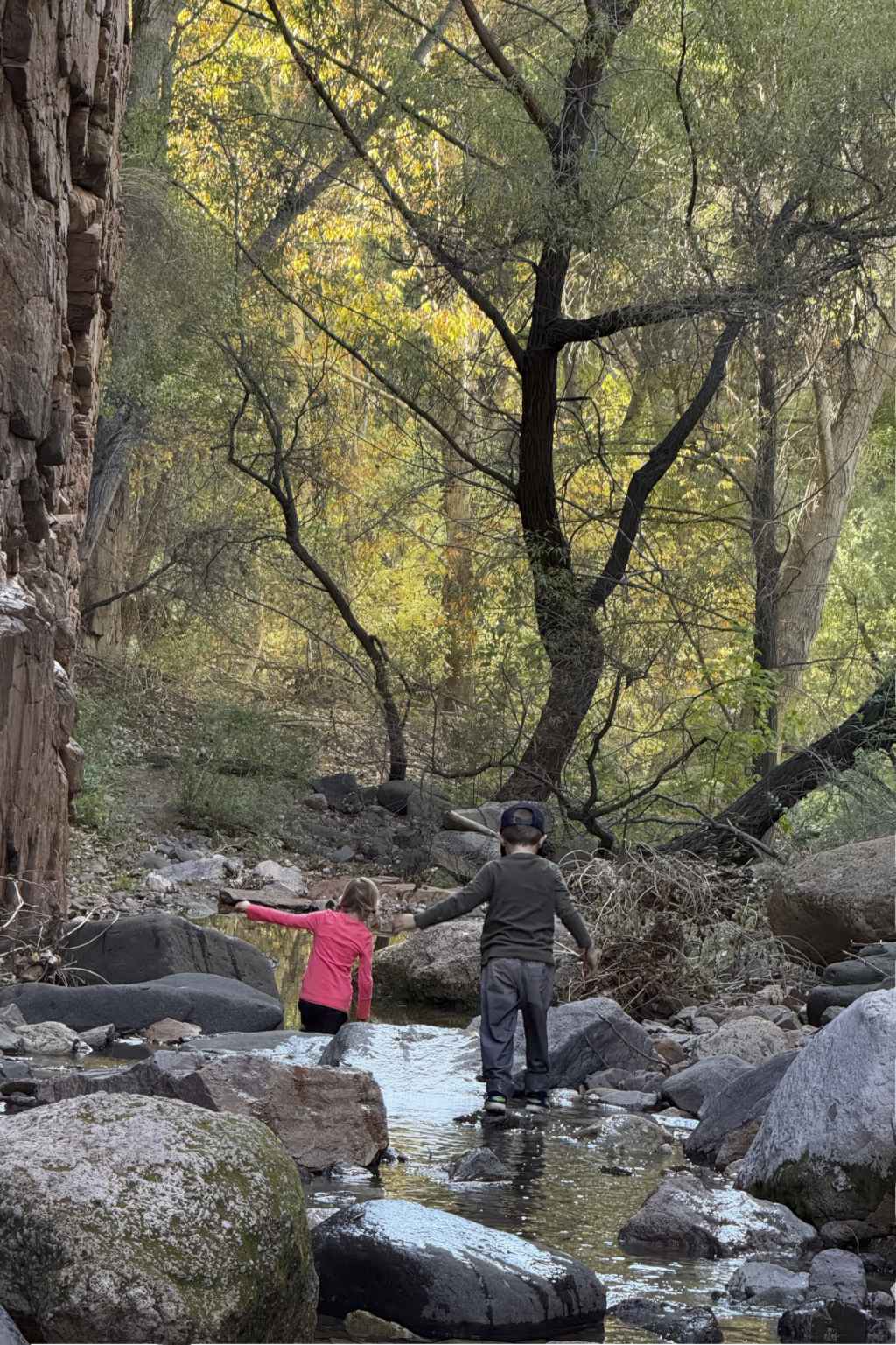
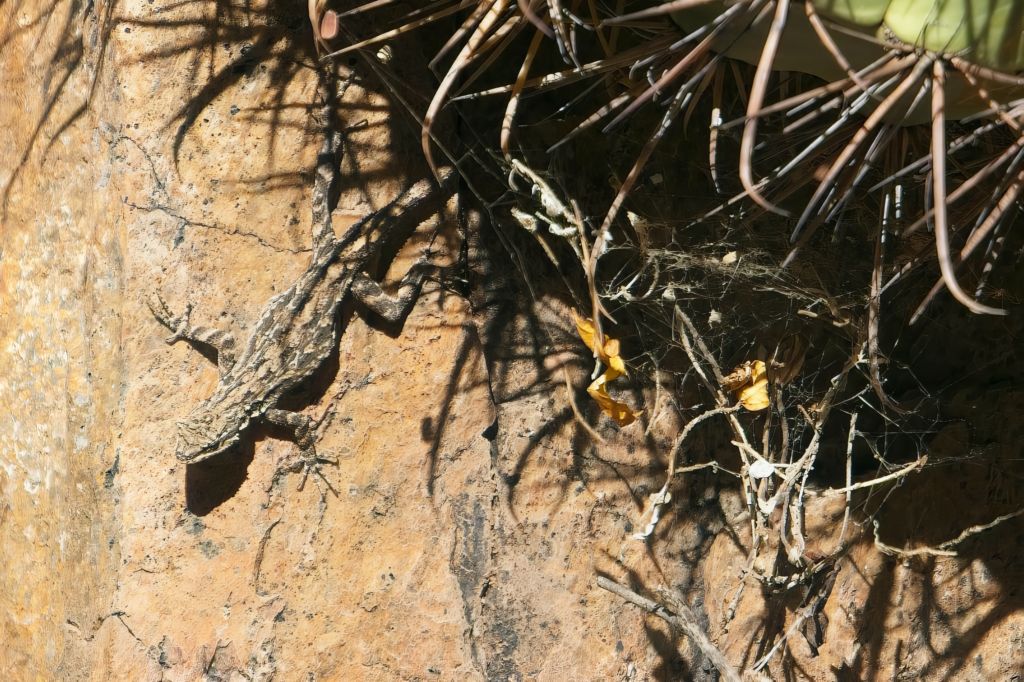
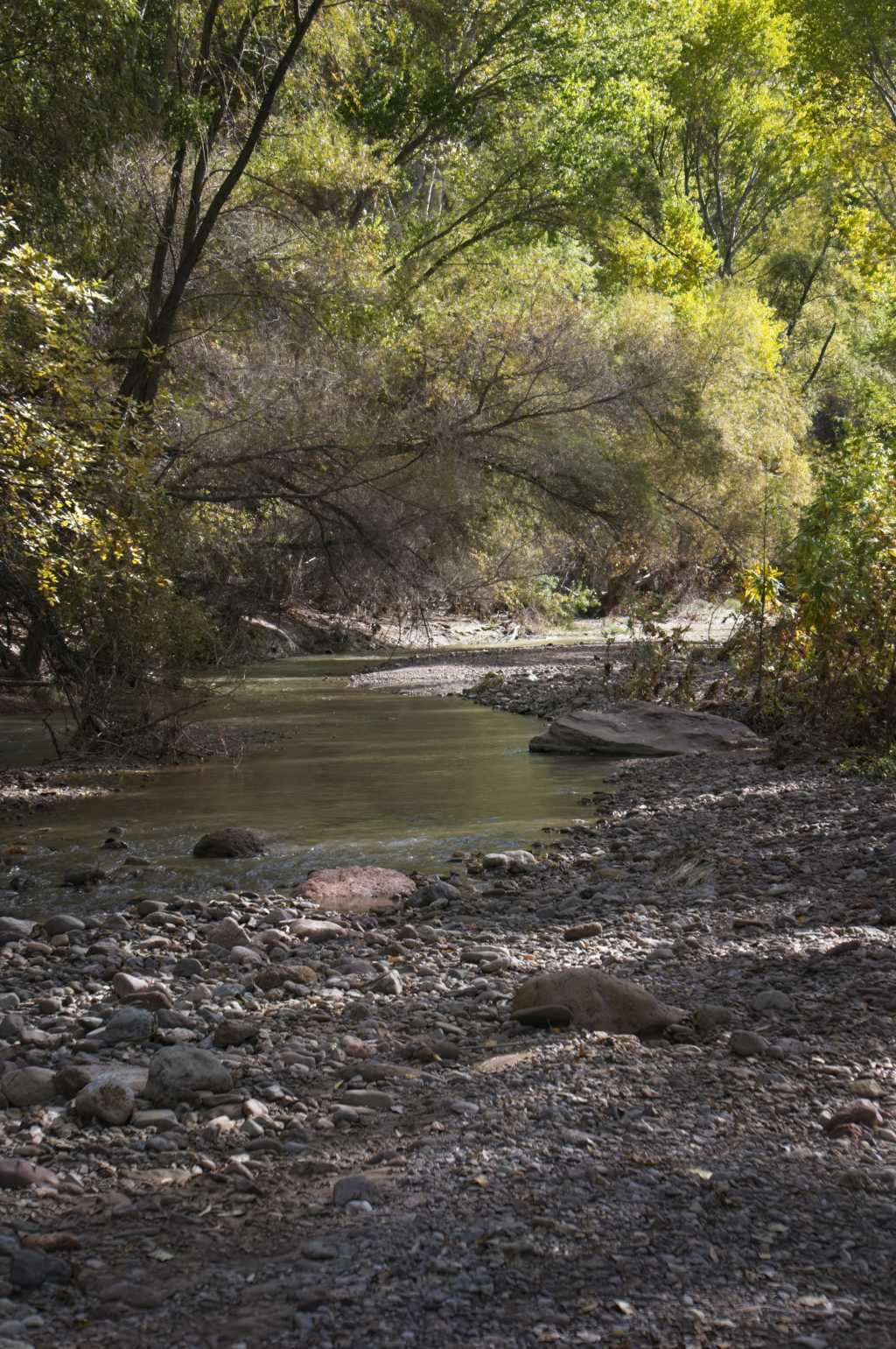
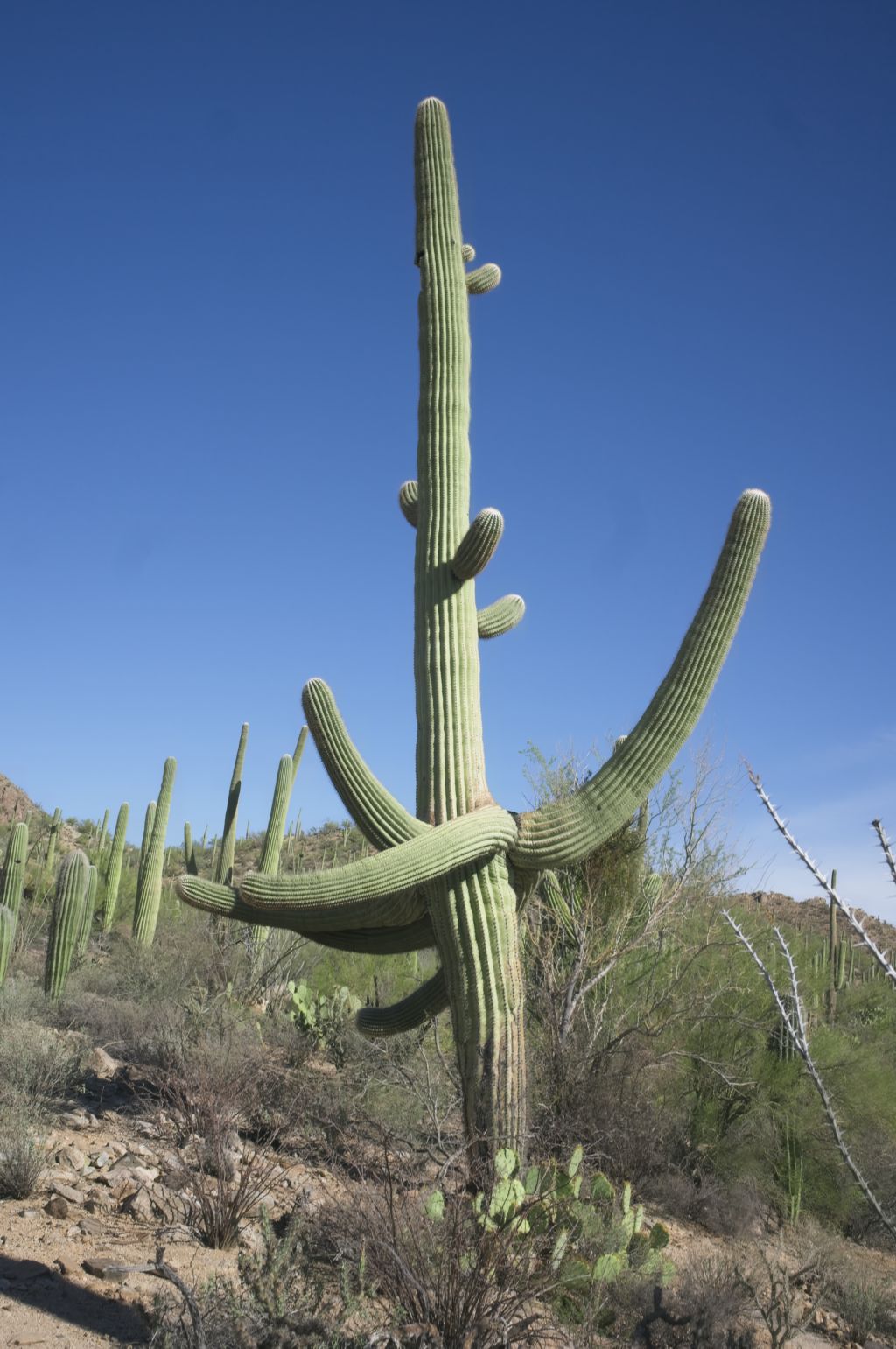
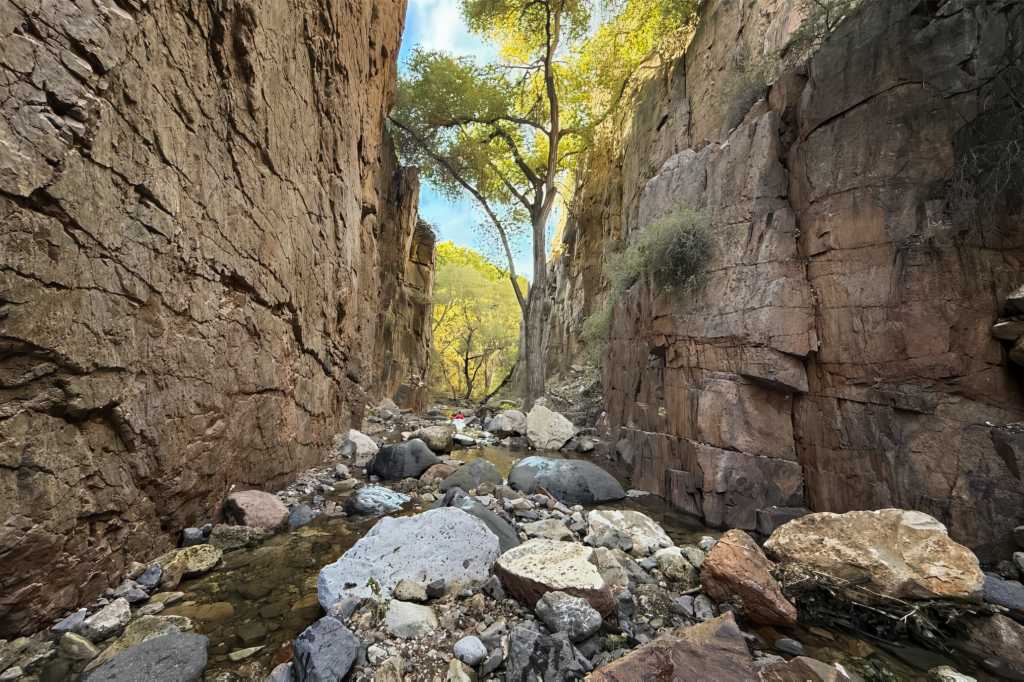
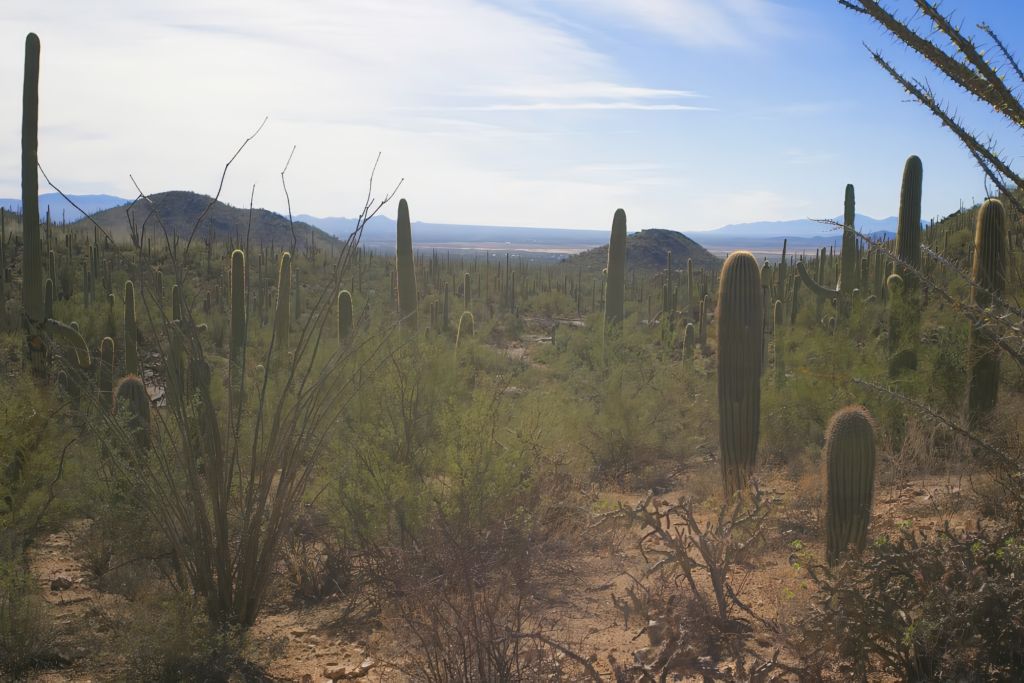
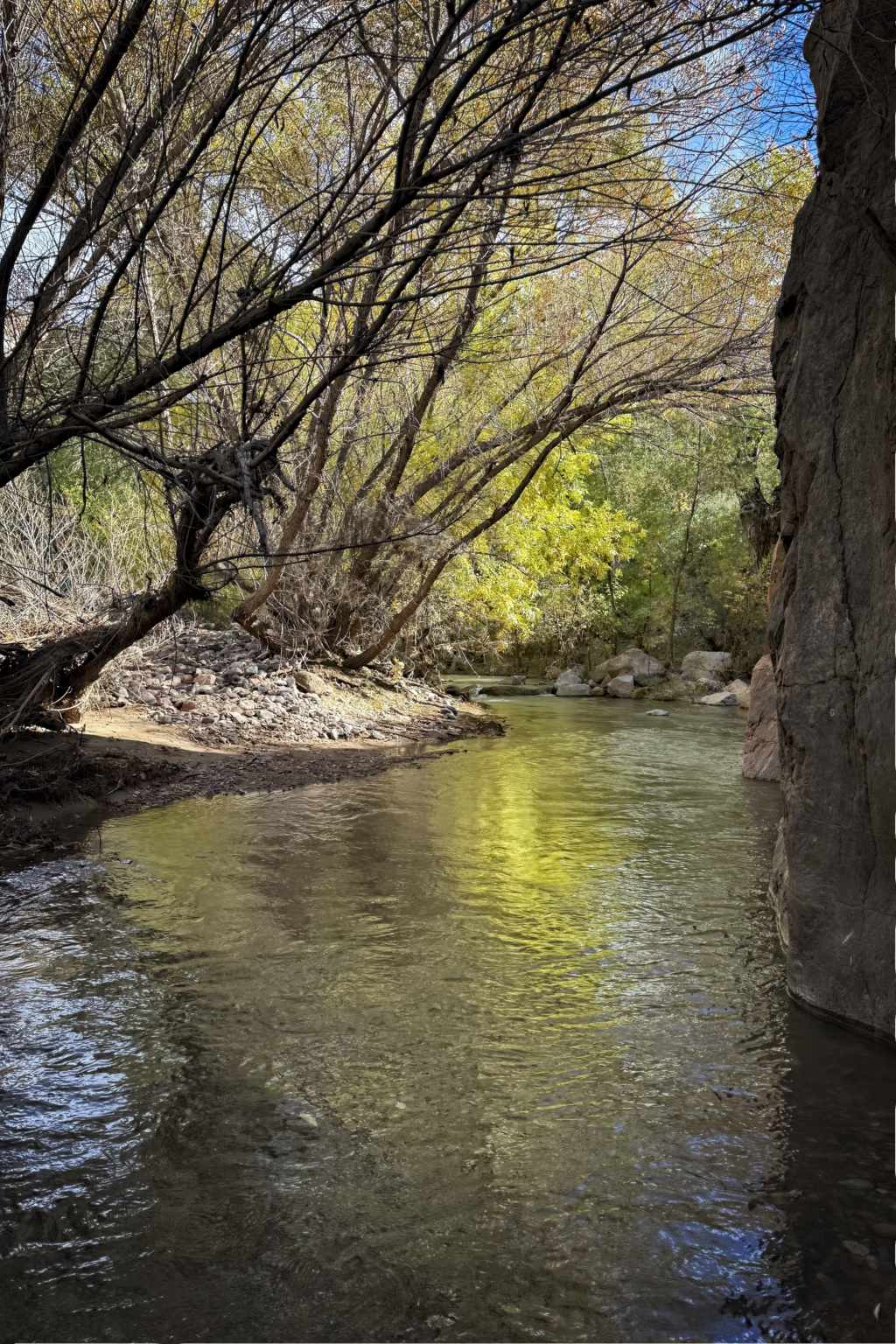
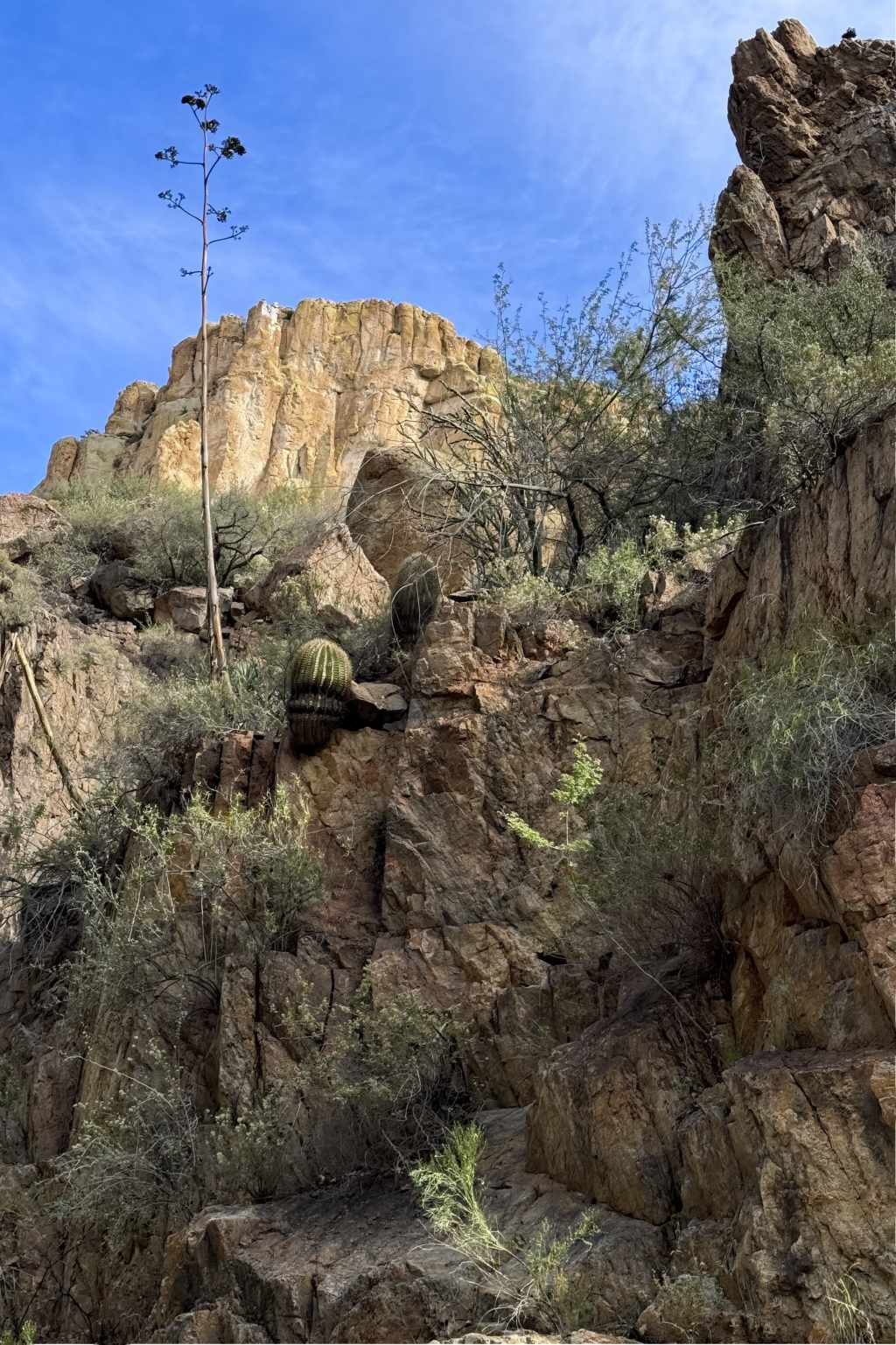
The Aravaipa, Arizona wilderness – comprising 19,410 acres located between Tucson and Phoenix – is a fragile but well-protected environment. We only saw a small fraction of it. The Aravaipa Creek runs year round – and where there is water in the desert, there is greenery and animals. By going in late November, the stream was not too high nor too cold for wading – and the fall colors of the shrubs and trees in contrast to the towering rocks and saguaro was nothing short of breathtaking.
Our itinerary was loose: The first day, we hiked in as far as young children felt like going and set up a good camp. Day 2, we explored the river and side canyons with just daypacks and snacks. Day 3, we walked out again. It was perfect.
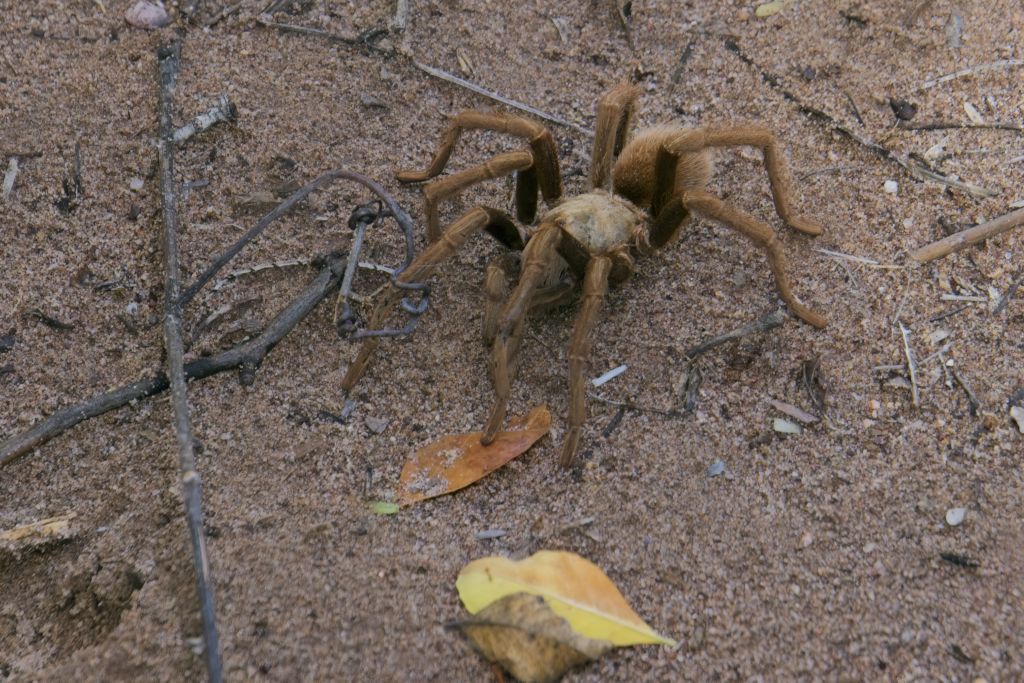
Did we see javelinas or coatimundis? No. We were a laughing, noisy bunch. No scorpions or snakes, either – the nights were chilly. We did, however, cross paths with a tarantula, who might have been on the lookout for a mate, as November is the tail end of their mating season. We stepped aside, thank you.
What was perhaps most amazing to me about this area was the sheer diversity of life here – and how incredibly amazing it was that anything at all could grow and survive under such harsh conditions – from below freezing temps to triple-digits, through drought and flash floods – plants that grew out of solid rock – and everything seemed spiky and prickly, as if they had to be on the defense or something might eat them – and where do animals find their food and shelter? Saguaros, the icons of this region, live 200 years or more and might grow 50 feet tall and nearly 3 feet in diameter! And then to imagine … how did people live here for thousands of years? Truly, awe inspiring. We are looking forward to returning.
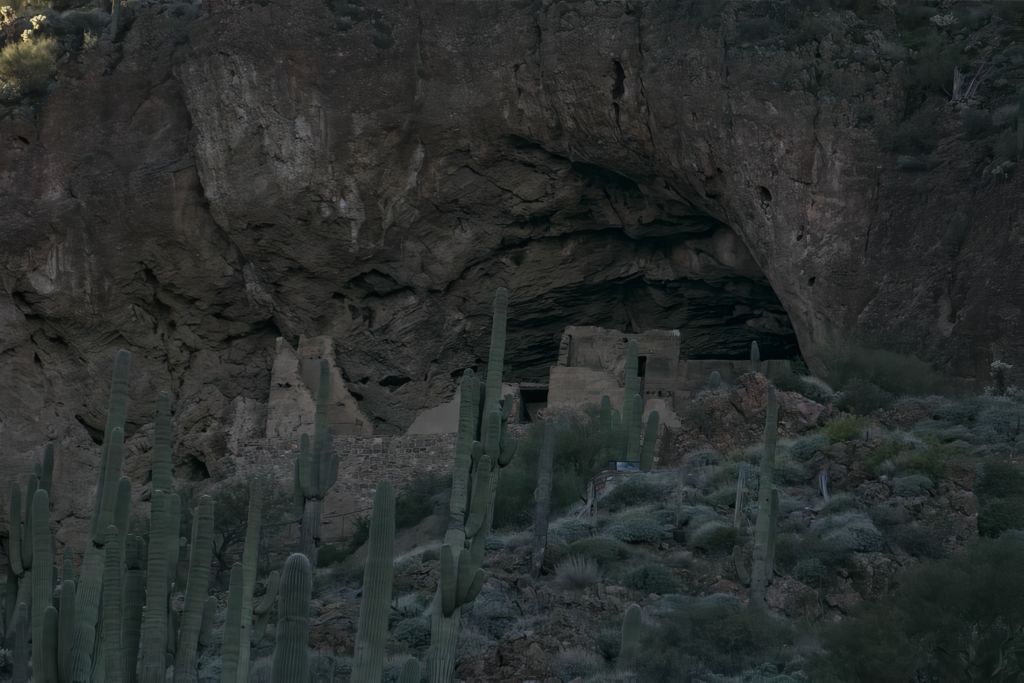
[The above gallery also includes a few photos from the nearby Saguaro National Park and from the Tonto National Monument cliff dwellings of the Salado communities, which date from 1250–1450. We also took a sidetrip to the Kartchner Caverns, known for its dramatic 50,000-year-old geologic formations and around 2,000 bats that come there every year to nest and raise young (no photos allowed in the caverns) – and in contrast, also to the futuristic Biosphere 2 facility in the small town of Oracle, AZ, which is the largest closed ecosystem ever built and which is now (through the University of Arizona) the largest facility in the world studying climate change. Those each deserve their own pages – stay tuned!]