I used to be a huge fan of Euell Gibbons. Actually, I still am. Not sure how many remember him (he lived 1911 – 1975), but back in the early 70s when I was living in a one-room log cabin in the Alaskan wilderness (I kid you not), I took great pride in identifying wild edible plants. Mr. Gibbons was a great inspiration to me. In my time, I have been known to consume vast quantities of fuzzy fiddleheads, brazenly pick stinging nettles with my bare hands, and fearlessly stalk the wild asparagus in remote abandoned orchards haunted by ghosts from eras past. I also found that a lot of things are edible, but it doesn’t mean you necessarily want to eat them, unless you’re on the verge of a scurvy attack or something.

In any event, it’s good to review that knowledge every now and then, because you just never know when it might come in handy. The best time to have “wild parties” is right now – and if you are reading this 6 months from now, that statement still holds true.

But face it – it’s early March, and as much as we love all those earthy roots that filled us with a feeling of abundance throughout the winter (you’re probably thinking I must have fallen off the turnip truck with that statement), what we’re craving right now is a fresh green salad and maybe a little chocolate (now we’re being honest).

Course, had I planned ahead, I would have lettuce, spinach, and radishes ready by now. I confess, I’m not the most efficient gardener. BUT a quick inventory revealed several things growing in my back yard in spite of myself:

First, the intentional plants: those things I purposefully planted and counted on to provide something fresh in late February/early March:

Chard_winter-killRhubarb_new-stalkKale-early-MarchPurple_mustard_tastes-like-horseradishThe chard, admittedly, took a beating by the cold and rain, the rhubarb is not quite there yet, but the kale and collards are growing strong, along with a few volunteer purple mustards. Leeks could be pulled now, as could some of the elephant garlic scallions that seeded themselves (oops – not intentional – still good). Course, to many out there, these are no-brainers. The beets, though, I worried about, because I did not cover them with any kind of cloche, which I knew would just be eaten by the wind. The wind loves plastic about like I love chocolate, in case you didn’t know.

ParsleyThymeMintCatnipGuy-Noir-catnip-kittyHerbs are looking good – particularly the Simon & Garfunkel quad: parsley, sage, rosemary, & thyme – as well as the big bay tree and the mints. Chives are sprouting, which excites me greatly, since we still have leftover potatoes. And my cat, Guy Noir, has found new batches of catnip. Useless kitty.

Then there are those things that add that element of surprise to the pre-spring table, which is everything listed so far PLUS lovage, cardoon, and French sorrel.

Not everyone grows these, but they should, if for no other reason than because they are so bold. Lovage smells strongly of celery and, I am told, was used by early European royalty in the bath as a natural deodorant; cardoon resembles its artichoke cousins (only you eat the stems, not the bulbs – and most certainly not the bitter leaves – although they won’t kill you, as I am currently testifying); and I imagine that sorrel, with its lemony tang, has undoubtedly saved many a wanton sailor from scurvy. Yes, I have quite the imagination, and I’m kind of unreasonably paranoid about this whole scurvy thing, obviously.

Lovage is celery-likeCardoon tastes a lot like artichokesFrench Sorrel is very tangy

And then there are those things that grow of their own free will – no, no, not my entire garden – WILD things! Wild Greens. That’s what this post was supposed to be about until we got sidetracked by other things that are showing up through sheer tenacity and perseverance, qualities we should all embrace and consume!

A walk on the wild side à la Gibbons provides a plethora of savage plants that are not only true survivors, but also nutritional powerhouses: dandelions, mustards, purslane, chickweed, and nettles. I am sure there are more out there – but a little backyard grazing and my basket is already full! These add a lot of zing to soups & salads before the rest of the garden gets going. Embrace! Consume! Yes! Wild parties are the best! Now – ANY time! Eat Wild Greens!

Wild mustard tends to be hot and a bit bitterChickweed is a fast growerNettles are a nutritional powerhouse

Next post: some recipes with these early greens!

Seed Catalog Frenzy

It is that time of year again: Seed Catalog Frenzy season. For those of you stuck in a snowbank, there is probably nothing more enjoyable than sitting by a fire scanning the pictures of sensual flowers that laugh in the sunshine and of all those delectable vegetables that make us secretly want to turn vegetarian if we aren’t already. (Or should I say, “sitting by a fire consuming something strong and alcoholic, scanning catalogs while waiting for this pile of white stuff that just won’t let up, already! melt into what will be a mud bog for weeks to come…)

The point is, we know these pin-up centerfolds can’t possibly be real, but every year, we buy into the fantasy. Readily. Greedily, in fact. They hit our doorsteps at a most vulnerable time. We are tired of another heaping plate of turnips and kale. These companies are blatantly feeding on our craving for a fresh salad with 6 different varieties of lettuce, topped with carrot shavings and spicy nasturtium blossoms …. Or maybe a simple, sweet, succulent strawberry – a bowlful would obviously be better … or maybe a fresh, vine-ripened-in-the-backyard tomato – the kind that explodes in your mouth and juices run down your chin….  This is why the Internet is full of support groups for people like you and me.

But in all honesty, I am one of the privileged ones. I’m not stuck in a snowbank at all. It could still happen, but so far, we’ve hardly even had a winter here in the Maritime Northwest. In fact, the days have been so warm, we are having the opposite problem: the illusion that spring is already here. It’s an easy one to slip into when rhubarb, pussywillows, and crocuses are up. Hold on to your shovels, though; we are officially still within the first 10 days of February.

I retreat to the comfort of my seed catalogs. Here are a few that are guaranteed to wake hibernating gardeners. Some are tried and true – some I am sure will be new friends. Check them out, drool into your keyboard, take normal precautions not to electrocute yourself in the process, and succumb to a little retail therapy.

Renee’s Garden: I came across Renee’s when looking for the source of a green-tomato mincemeat recipe that my family just loves. What a find! How did I possibly miss her over the years? Renee’s Garden is an information-packed website with lots of gardening tips and ideas and recipes for enjoying the harvest. She specializes in gourmet veggies and heirloom cottage flowers. I particularly like her kitchen garden design page with plans for long- and short-season veggie gardens. A community forum lets readers talk with each other about what’s happening in their plant worlds. Renee Shepherd donates seeds all over the world – Kenya, Nepal, Honduras, Bolivia, Uganda – and also to community & school gardens in the U.S. – to help people be more self-sufficient and to promote sustainable agriculture. Personally, I will be growing 16 new 2010 varieties of vegetables and flowers from her garden and will be posting the progress on these pages. Obviously, I am a huge fan.

Territorial Seed Company: This is our Northwest classic go-to seed company for all things garden related: over 200 varieties of new seeds for 2010, all kinds of tools, kitchen supplies, instructional videos, and more. I buy their seeds every year and have never been disappointed.

West Coast Seeds: A Canadian company – a good source of untreated seeds; good growing guides for everything from achillea to zucchini; handy planting chart. I have not tried them yet, but they come highly recommended. I am located close to the Canadian border, so their seeds should be a good fit.

Uprising Seeds: You can’t help but love this family and their adorable son! Seeds are grown in Acme, WA – definitely acclimated to northern areas of the Pacific Northwest (Acme is located east of Bellingham, west of the Cascades). Perhaps they don’t have the varieties of larger seed companies, but the basics are covered, and it is fun to support young people trying to make a go of it.

The Thyme Garden: I admit, I have a certain weakness for herbs and dye plants. At one time, I was growing over 100 varieties, thanks mostly in part to The Thyme Garden. They describe themselves as “an eclectic, earth friendly family business working with nature to provide organically grown seeds and plants…” Their gardens showcase some 700 varieties of useful plants from all over the world, and is a place I definitely want to wander around in one of these days. For now, I wander through their catalog that is full of brilliantly written descriptions of intriguing must-have plants.

Seed Savers Exchange: A non-profit membership organization dedicated to conserving and promoting heirloom vegetables, fruits, flowers and herbs. This 850-acre Iowa farm must be absolutely phenomenal. They permanently preserve over 25,000 endangered vegetable varieties. You can spend hours on their catalog, but becoming a member gives you access to 13,571 MORE varieties, in addition to being able to buy seeds from other members and knowing you are doing a good thing for protecting the diversity of our food supply. Seriously, I don’t think I could handle the choices.

Nichols: Located in Oregon’s Willamette Valley, where just about everything grows. I remember ordering my very first elephant garlic from Nichols back in the 70s, and I have been growing it ever since.

Seeds of Change: These guys are located down in New Mexico, so not even close to the Pacific Northwest – but they are Certified Organic, have done a lot of research on sustainable agriculture, and provide lots of growing how-tos as well as top-quality seed. I admire what they’re doing.

Jardin du Gourmet: Aka, Artistic Gardens. Years and years ago I came across this seed company that offered hard-to-find herbs and specialty vegetables. I confess, I have not ordered from them in awhile, but I am glad to see they are still in existence. What I really liked was that you could order these little trial packets to test out a particular variety. Guess what? Seed packets are just $0.35! And I see they are offering a package deal of herbs: 50 (Yes FIFTY) herb varieties (they select which ones) for only $17.50. Wow. Where can you get that?!

The Cook’s Garden: More varieties of lettuce and greens that you ever knew existed. If you aren’t craving a fresh salad now, you soon will be! This is a new find for me – one I am sure I will return to.

Seeds from Italy: Tuscan, Roman, Venetian …. Hmmm. Anything in this catalog would pair well with my gourmet garlic collection. How have I missed this source? I like a catalog with a niche!

Local sources: Last but far from least! We are seeing a lot more locals saving their own seeds and offering them for sale or exchange. The nice thing about buying local is that you know the plants are already acclimated to your region. In my neighborhood, Nash’s Organic Produce is offering local seeds (Seed Dreams) in addition to all the fresh fruits and vegetables they carry. I am anxious to see how the Walking Egyptian Onions do! (You can’t order the seeds online; you have to stop in at their store in Dungeness.)

That’s all for now. I’d be interested in hearing about what are some of your favorites!

Nash_HuberI’d just like to remind everyone that Nash’s Produce is hosting a farm tour this coming weekend through the PCC Farmland Trust. It’s a great opportunity to see how a team of extremely knowledgeable, hard-working folks can organically farm 400 acres and offer so much to our community. Think you can’t grow much in winter? Think again. Nash’s fields are continually in motion – out comes one crop, in goes another. He makes full use of green manures, compost, and crop rotations. He’s even experimenting with several kinds of grains. This morning I ground some of his triticale and made the flour into waffles. Outstanding! Later I swung by the Dungeness Valley Creamery for some raw milk, looked across the road at one of Nash’s fields, and saw probably 100 trumpeter swans! Gorgeous! Seriously, sometimes I just have to pinch myself.

But back to the weekend bash at Nash’s: you can register for the event on the PCC website. I think tomorrow is the last day, but you could call to make sure. My understanding is that not only do you get a close-up tour of Nash’s 400 farmed acres, including the Delta Farm, which was PCC’s first preserved property, but also a meal goes with the deal – and you won’t get anything fresher than that!

pig-meditationGo to Nash’s website to see more of what he’s got going on around the farm (and some good recipe ideas, too). Nash has a sustainable operation that includes a well-fed herd of pigs. Very fun to watch their antics! Nash’s winter farmshare program is starting up later this month and is an excellent deal. Personally, since I grow a lot of our own food, the Nash Bucks is a better option for us — pay $350 upfront and get $400 worth of fresh organic produce that you can buy whenever.  You get a discount and the farm crew gets added money upfront, which is particularly appreciated when they are gearing up for spring plantings.

edna-and-friendsAnd by the way, if you’re in the area, drop in and see the Dungeness Valley Creamery at 1915 Towne Road. The Associated Press recently released a very misleading article about e. coli bacteria that were implied to have come from the Brown family’s cattle. In reality, there has never been ANY e. coli found in the Dungeness Valley Creamery raw milk. I drink it all the time and have never had any problems. My husband is lactose intolerant and does just fine with the raw milk, which, as Jeff Brown explains to me, is because the lactase enzyme that helps you digest lactose is not destroyed through pasteurization. Their dairy and bottling area is impeccable. Their cows are open pastured and treated like members of the family. This milk is obviously nutritious, real food.

Brown-family-cow-newbornUnfortunately, the Washington State Department of Agriculture (WSDA) is not held accountable for the damage. Such action seems unconscionable, but apparently they can get away with it. The Browns ended up having to throw away hundreds and hundreds of gallons of good milk. They have no recourse other than to keep doing what they do best: produce quality milk. Interestingly enough, outside sales might have dropped, but local folks who know the Browns and know what an outstanding dairy they run, came out in record numbers to support them. So, if you’re in the area, if you’re visiting the Delta and other farms so critical to the security of good food in our region, stop in at the Dungeness Valley Creamery while you’re at it and show your support.

hair-of-pigIt’s no secret that the Sequim-Dungeness Valley has practically been inundated by new housing developments with expansive lawns, box stores, and parking lots. Truly, we are very fortunate to have the farms we still have. We can save the future of our region by supporting our local farmers, donating to organizations such as Friends of the Fields, a nonprofit dedicated to saving farmland, and spreading the word as to the importance of having access to locally grown food. We are at a crossroads. Where does your food come from? And do you know where your children’s children’s food will come from? We’re losing land to development right now at the rate of 1000 acres/year. It’s a valid question.

Meet Nash Huber and his crew. See up close how he does it. Stop in and meet Jeff and Debbie Brown and Ryan and Sarah Brown McCarthey. Meet the hands that feed us and thank them first hand.

Surprise! A rosebud! What is this doing here?

Surprise! A rosebud! What is this doing here?

A lot of people are trying to make their gifts this year. But face it – pulling together something that is heartfelt, full of personality, and low on cost is not always easy. And it takes something that might be even less available: time! Picture yourself working long hours into the night with a result that is a site to behold (meaning, picture people snorting fizzy drinks out their noses in response). Ahhh, the joys of realizing you are craft-impaired.

Every year, I try to make a lot of our Christmas gifts, with varied results. Last year, many of them were from the kitchen, and most incorporated copious amounts of sugar (what was I thinking?): homemade marshmallows, peppermint candies, gelatinous fruit candies, candied ginger, to name a few … some of these things bordered on weird, most were not from the garden, and I found some of them months later in my daughter’s cupboard while I was looking for the peanut butter. Hmmm.

And speaking of disasters, for the grandkids last year, we went through elaborate extremes to build a dollhouse and a wooden monster truck, both of which were works of art. Grandpa and I toiled away like busy antique elves in our toyshops getting them ready for the special day. It was a rude awakening. The kids brutally pointed out to us (as only children can do) two significant problems: 1) the dollhouse was much bigger than the truck (meaning, all gifts are not created equal), and 2) the truck, well, it didn’t *do* anything. No blinking lights, revving engines, honking horns, hip-hop music. Nothing.

This year, the whole anxiety of wanting to give something homemade but not wanting to fail has put me in avoidance mode, and in my usual way of procrastinating things and thereby sabotaging any hope of success (save that couch session for a different post), it is now just 10 days until Christmas and I am looking around to see what I can scavenge together at the last minute – also as usual. When I get like this, I usually retreat to my happy place: my garden.

wilted_winter_greensI surveyed my options, and quite frankly, except for an occasional surprise gem (a rosebud! mon petit chou [my little cabbage!]), the garden looks pretty sad right now. A basket of wilted collards just ain’t gonna hack it. A bouquet of brown broccoli is just that.

See, the thing about garden gifts is that most of them require some forethought, something that is in rather short supply around here. For example, it would have been nice to pick and dry the herbs in their prime and have them all ready to go into homemade herb mixtures for soups, stews, and goulashes (with a “bouquet garni” label to make them look gourmet); bundles of dried lavender could be sewn into sachets; dried roses and other herbs and flowers could be tossed together in potpourris; herbal vinegars would be ready for winter salads; and fruits in cough-syrup-like liqueurs would be available for medicinal uses. Ahm.

bay_leaf_treeBut what about NOW? Slim pickins, sure, but there’s still stuff out there, depending on what you have and where you live. Before you go grabbing a handful of tall field grass and other noxious weeds, tying them with a piece of raffia, and calling it “a bouquet of wild bird seed,” here are 20 (yes! count them!) very quick, almost foolproof ideas:

  1. Wreaths, Swags, and Bouquets: Evergreen herbs such as rosemary, sage, & thyme can still be picked and tied into mini-wreaths or swags. They also look pretty used in place of a bow on top of a present. If you are lucky enough to have a bay leaf tree, you can probably get enough branches with a light pruning to make a nice wreath or two. I am very proud of the one that I originally started from seed. It is protected by our barn and is now quite tall. Gray santolina and lavender clippings also make a nice background to a wreath or by themselves as a room or drawer freshener. And don’t forget dried fruits: apples sliced lengthwise or crosswise to get different designs, dried, and arranged on wreaths with dried orange slices, cinnamon sticks, and star anise are very pretty!
  2. purple_sageSage Smudge Sticks: I have a rather old and leggy sage plant that works well for this. Tie a bundle of sage stems and leaves together – that’s it. A good way is to start at the stem end, wrapping string up to the tips and then back down again. You could also add cedar, lavender, mugwort, and other herbs. Sage sticks have traditionally been used in Native American ceremonies for purifying people and places. Negative energy is carried away with the smoke.
  3. bambooBamboo. Got bamboo? There are probably 1000 things you can do with bamboo. My bamboo is rather thin – just right for a lightweight fishing rod, woven into a basket, used as a frame for a picture, possibly woven into a small floormat or window blind. I probably won’t get around to any of these things – but they are ideas.
  4. Pinecone Firestarters: Technically, the pine tree is not part of the garden, but we are surrounded by firs, pines, and cedars, so cones are not hard to find. Make the firestarter by dipping the cone in melted paraffin. Add a crayon or two and you might get colored flames. I have also heard that sprinkling the cone with salt, Epsom salts, boric acid, or alum will also give color in the fire. Coat with another coat of wax to make it stick.
  5. Leaf-Imprinted Candles: You don’t have to make the whole candle here if you aren’t prepared to do so. Just get a candle, flatten leaves or other vegetation around it, and paint the leaves on with a coat of melted paraffin. Done. Fancy.
  6. Bookmark of Pressed Leaves: Don’t have time to press leaves? Lay them between the pages of a paperback book. Put rubberbands around the book to hold it shut. Put the book in the microwave. Put something heavy on top (NOT a bowl of water – the idea here is to get rid of moisture). Reduce the power by half and turn it on for a minute. Check and repeat. Be careful not to overcook or they will turn brown. The pages will absorb the extra moisture and keep it flat. It’s amazing how this method keeps the color of the plant. Put your pressed leaves (or whatever) between self-sticking laminating sheets, cut to size, and you’re done. Alternatively, you could iron them between waxed paper, but the waxed paper sometimes tends to come apart.
  7. calendulaCalendula Oil: You may or may not still have calendula blooming in your garden. Mine was looking pretty wilted the other day, but I think it might snap out of it. Pick the blossoms and cover with a little olive oil that has been warmed (not too hot). Let them steep over several days and strain. Add to salves or use as is. Very soothing on dry skin, irritations, diaper rash, etc. I wouldn’t advise eating it, though.
  8. Apples: Organic, homegrown heirloom apples make a great gift in and of themselves. If you have a juicer, fresh juice can be a special treat.
  9. Applesauce Cinnamon Ornaments: These are beautiful on the tree and make great air fresheners when the holiday season is over. Just mix together 1 cup each of cinnamon and applesauce (start with less applesauce, since your homemade sauce might be more or less watery – add more to get the right consistency). Add 1 Tablespoon of white glue (like Elmer’s). Roll out the dough between sheets of waxed paper. Cut with cookie cutters. Put a hole in the top with a straw. Let dry. String with a ribbon. Nice!
  10. Pickled Garlic: Got any garlic left? If you do, it is probably nearing the end of its life cycle, especially the hardneck varieties. One way to preserve what is left is to pickle it. I am not a big fan of pickles, but I will make an exception for garlic. The problem I have with most pickled garlic recipes is that they add salt, sugar, a whole lot of herbs and spices, and sometimes other things like jalapeños or red peppers. I am more of a purist. I like simplicity. The sugar is unnecessary. The salt brine is too much for me – I don’t eat a lot of salt. And I don’t want things taking away from the flavor of the garlic, including cooking. But the beauty of this is that you can make your own concoction, and many people like additives. For me, what works best is putting peeled garlic in a jar and covering them with cider vinegar or a vinegar/wine-vinegar mix. Put it in the fridge and let it set. That’s it! Ready in 2 weeks – but you could dip into them sooner. A couple of quick tips: if you briefly (very briefly) dunk the cloves in boiling water, they will be easier to peel. If you warm the vinegar first, it will seep into the garlic a little faster. If you cover the jar with plastic wrap, the vinegar is less likely to corrode a canning lid. I am told they will keep for years. Mine never have a chance.
  11. rosemaryHomemade Mustards: Not everyone grows their own mustard, and so much of it grows wild around here, it doesn’t surprise me. However, I procured some special black mustard seeds that have done very well for me. I don’t have room in this post to share all my mustard recipes, but if you grind them with a mortar and pestle, add some liquid (a little water, vinegar, white wine, beer, champagne…be imaginative), and maybe a little crushed garlic, grated horseradish, a few herbs, a little honey…. Be prepared to be amazed. Additives are good here. They add complexity. Grey Poupon and Chinese Hot will take a back burner.
  12. Flavored Vinegars, Vodkas, and Brandies: Although these should cure for a couple of weeks or more, they are still good in shorter time. Warm, don’t boil, the liquid. Rosemary, sage, thyme, fennel, or combinations of the above all work well. Fresh berries are obviously long gone, but freezer berries might be worth a try.
  13. Canned Goods: Of course, if you managed to find time to do some canning over the summer, you might have a variety of colorful jars you could share: jams, jellies, relishes, fruits, etc., and now all you have to do is tie a ribbon around them. Our family is getting plums, tomatoes, relish, green-tomato mincemeat (mmm!!), and corncob jelly (it will be another eewww moment, but don’t knock it ’til you’ve tried it! Very corny!). There is still time to make more applesauce if I can get around to it. Apple butters would also be nice. They can be left to cook down in a Crockpot while you do other things.
  14. Pumpkin or Squash Pie: Did you grow lots of squashes? Mmmm! Who wouldn’t love a homemade pie!
  15. santolinaPlant Starts: Winter is a great time for transplanting. Here in the Pacific Northwest, temps got down to the teens for a few days and everything was pretty rock-hard out there, but we’re back to our usual rain again (at least for the time being), and it’s possible to go out and divide up a few plants. In my yard, rhubarb, lovage, horseradish, sage, thyme, marjoram, savory, oregano, hyssop, mints, lemon balm, feverfew, verbena, bergamot, and madder are all possibilities. The blades have died back on the chives, but one could still dig up a clump. I have not divided lavender before; I would rather start a cutting. Likewise for santolinas and wormwood. Heck, if time is of the essence, you could take cuttings of your more woody plants, stick them in a jar of water, and let your recipient wait for them to root!
  16. plants_in_bootThe Funky Chicken: This is similar to the idea above, except no digging is required. Maybe you have a piece of yard art or a potted plant that you could simply pass on to someone else. For example, a couple of years ago I planted some hens & chicks in an old boot. They have survived all kinds of conditions. Time for a new home. I can always plant more. I have more boots to recycle.
  17. Indoor Herb Garden: Sure, this would have been nice to get going a couple of months ago, but you could still dig up a few small plants, put them in pots that will fit on a windowsill, and let the receiver take it from there.
  18. Seeds: Again, you could have collected those seeds before the pods shattered and scattered all over the ground, but hey, you might be surprised what is still out there for the picking. I have massive quantities of cardoon, myself. Poppy pods, calendula, and feverfew are also available. A gift certificate to your favorite seed outlet might not be from your own garden, but might be just as much appreciated (if not more, because then they get to choose). Personally, I highly recommend Renee’s Garden Seeds and the Thyme Garden. Both websites are extremely informative.
  19. Mon petit chou! (a bit frosty!)

    Mon petit chou! (a bit frosty!)

    Coupon for Future Produce: This is kind of a commitment, but if you’re like me and always grow a little too much of everything, a coupon for an FSA (Family Supported Agriculture) is not too far-fetched. Every week they can come over and help you harvest the produce! Pull a few weeds, too!

And last but not least for a homemade gift idea from your garden:

20. A Painted Rock: Paint “I love you” on it. That says it all.

(Note that there are no pictures of finished products in this post? I have to get busy now!)

Happy Holidays, Everyone!

Purple Fields of Lavender

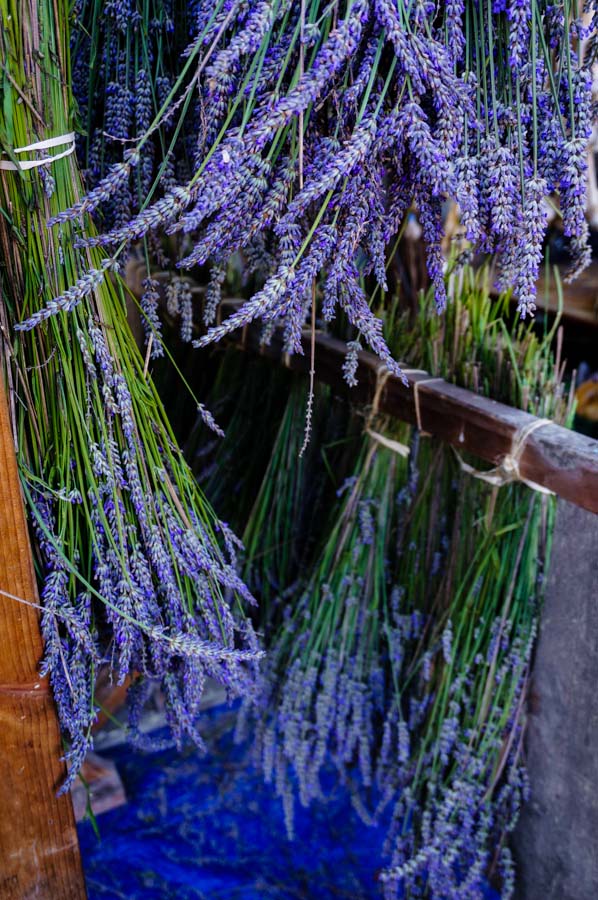
purple-white_lavenderThis is the time of year when Sequim turns into one big party in purple. If you missed the throngs of people – never fear – the farms are still purple, the lavender still smells, well, like lavender, and the shops are still open. You can still come and enjoy the sights, minus the crowds.

lavender-fieldLavender has transformed our community. And although it’s all just a little crazy to some of us locals, it is still energizing and calming at the same time. Such are the effects of lavender.

But I am not complaining. In an area where ¾ of the original 76,000 acres of farmland have been sold to housing and development projects, and where only 2 of the once 500 dairies remain, growing lavender has been a surprising, albeit nontraditional, way of preserving a bit of agriculture in our region. And while corn mazes and pumpkin patches are sprouting up all across the U.S., Sequim remains uniquely lavender.

Agritourism is, in fact, changing the face of agriculture and may be the saving grace of many farms across the country. It’s hard to make it work these days in farming. Globalization has raised competition to a whole new level; industrialization has made it nearly impossible for traditional crops to be profitably raised by small farmers. As costs for raising crops and livestock have risen and prices for commodities have fallen, more and more farmers rely on off-farm income.

But as Charles Darwin said, “It is not the strongest of the species that survives, nor the most intelligent that survives. It is the one that is the most adaptable to change.”

Farmers have learned to adapt. To compete in today’s market, diversification and specialization are key. Offer something that the big agribiz and global network cannot: specialized products and a unique experience.

Enter agritourism – the recent wave in an excuse for farmers, artisans, and consumers to exchange hugs (as if we need one!)

farm-standAgritourism is an alternative farming enterprise – it can be fun, educational, and yes, profitable. People who attend ag events are, after all, looking for a good time, good food, and maybe learning something in the process.

The Sequim Lavender Festival is all about sensations: see, hear, feel, taste, smell. People come for the experience. Thousands of them. People are willing to pay to play. (Some people will even pay to work! Especially if they’re learning something in the process.)

And while it may be true that agritourism presents a rather romaticized view of what it means to be a farmer, it has also brought back an appreciation of key values from the “good ol’ days”:  integrity, hard work, trust, looking someone straight in the eye, shaking hands, and friendship. It’s direct marketing at its best.

After all, when it comes to being successful, one thing hasn’t changed:  it’s all about relationships. Know your farmer. Know where your food comes from. If you care about these things, how can you NOT support your local farmer? And when you meet the artisan who so carefully instilled a bit of their own personality into their craft, how can a mass-produced item even come CLOSE in comparison?

Once people have made those connections, they keep coming back. (This is where the hugs come in.)

Some positive points:

  • Agritourism benefits the entire community – events can give a significant economic boost to other local businesses.
  • Agritourism instills an appreciation for agriculture and also an awareness and appreciation for where your food comes from (and what it takes to get it to you!)
  • Agritourism educates people about the issues facing farm operations and the business aspects of farming.
  • Agritourism provides an opportunity to sell (and buy!) all kinds of local and regional products that you can’t find elsewhere.
  • Agritourism can help the whole family get involved in the success of the farm – and through that success, perhaps inspire the younger generation to continue farming after the older generation retires.
  • Agritourism is helping farmers stay on the land.

old-barnOf course, not everyone wants their community turned into a theme park. And 30,000 people traveling the one-road-in and one-road-out of a town of about 6,000 residents on a single weekend can be a bit overwhelming. There are tour buses, motor-coaches, traffic accidents, and backups. There are liability issues. Porta-potties. Potential vandalism and theft. Roadside garbage. More and more people find out what a paradise this is and think they just might retire here. Real estate goes up and so does urban sprawl.

And suddenly our quiet little town is no longer so quiet. Some of us just have to leave town for the weekend.

I mean, that’s what Forks is for, right? (Oh, that’s right. Forks has Twilight now.)

Hmmm… I hear there’s a quiet little spot in eastern Washington … it’s a bit hot and dry, but maybe they need a sagebrush festival….

Garden Fireworks

angelicaangelica-fireworksAn Angelica plant seems to be exploding in celebration! Happy Independence Day everyone!

Garlic Scapes Return!

bouquet-of-garlic-scapesI have been getting a lot of questions about garlic scapes lately – and in checking my blog stats, a lot of people are searching for recipes using scapes. Scapes, those curly flower shoots from the hardneck varieties of garlic, arrive just as we are running out of our green garlic harvest. My favorite way to use them is in pestos with parsley, olive oil, & parmesan cheese. They are also great in hummus and other dips. Cook them very gently and pair them with things that aren’t too overpowering so their delicate flavors shine through. They can be used like green onions in salads – and are particularly good in bean salads. They are great in every combination of stir-fry imaginable. Toss them into omelettes. Roast them with asparagus.  Chop them up over fish. Infuse them in butter. The possibilities are endless! And if they get too tall and tough to eat, cut them and put them in a vase!

This afternoon, I strolled (ok – hobbled – but that’s for another post) through the garden and saw a very simple, fast, easy, and gourmet (!) dinner before me: first-of-the-season garlic scapes, first snow peas, salad greens, & thinnings – all tossed together in a tortilla. Here’s the recipe (loosely defined — I don’t really believe in recipes, just guidelines):

Spring Garden Tour Tortillas

  • A dozen garlic scapes, coarsely chopped
  • Several handfuls of snow peas
  • A few beet thinnings – some with little beets (chop stems; separate out leaves)
  • A few chard thinnings (chop stems; separate out leaves)
  • Some radish thinnings (separate leaves)
  • Numerous leaves of red & green leafed lettuce (we have tons!)
  • Numerous leaves of spinach
  • Also used: some leftover chicken, chopped (optional – this could also be meatless), some olive oil,  a little balsamic vinegar, and some tortillas.

Just an aside – I don’t believe in wasting anything. I feed scraggly hairy roots to my worms, but eat just about everything else. Stems are good. Radish leaves loose their prickles when lightly cooked. But the idea here is to get creative with whatever you have on hand. Here we go:

Heat a frying pan hot – toss in a little olive oil – and then toss in the scapes, peas, the little beets, & stems from the beets & chard. Cook a couple minutes at most.

Snack on the radishes while you cook everything.

Toss in the chicken, give it a stir, & the chopped greens (beet leaves, chard, radish tops). Sprinkle with a little balsamic vinegar – not much, because it can be overpowering – just enough to give it a little tang. Stir & cover.

As soon as the greens are wilted (about 1 minute), fill a tortilla, top with fresh lettuces & spinach, and eat. The wilted greens add a bit of moisture to the mix, so you might have to tilt the pan to let it drain to one side. Cheese would also be good, but some of us are lactose-sensitive, and it is just fine without. Chopped nuts might be nice. Too bad I forgot chopped chives!

Fast – fresh – fabulous – fun – several reasons to grow your own or buy from your neighbor!

Garlic Status – Summer Solstice ’08

Garlic Status_Summer Solstice 2008

Despite the cold spring here in the Pacific Northwest, the garlic has been thriving! We got everything weeded over the weekend and thoroughly watered. You can almost feel them reaching upward, waiting for that promised sunshine!

As you can see from the photos, I planted the garlic rather densely in beds (4 rows/bed) this year, which has really facilitated the weeding, fertilizing, & watering tasks! The picture in the lower right quadrant shows 2 plots in the background that were recently tilled under — I had grown a green manure crop of a combination of clover, vetch, and ryegrass; I will be planting them again soon with more of the same; these will be garlic beds for next year and 2010. Yes, those are the Olympic Mountains in the background. Gorgeous morning!

Also pictured are the tall spikes, often called “spears” of the elephant garlic. The hardneck varieties send smaller shoots, called “scapes”; pictured are the tight-curling scapes of the rocambole hardnecks. I have been cutting these off (yes! you can have some if you are in the neighborhood!) and using them in pestos, salad dressings, & stir fries. They also add an unusual touch to floral arrangements. I am making some garlic hummus to bring to a barbecue this weekend, and am thinking about how the scapes might be quite beautiful pickled in a jar! Mmm!

I figure bulb harvesting is about a month or so away (a little late this year). I may get one more watering in, but will stop the water after that, which will help prevent molds and extend the shelf-life of the bulbs.

We might hit 70 today when the official summer starts at 4:30 today! That is welcome news for those of us who have been wearing sweatshirts all spring! Celebrate the solstice!