Sidenote: This blogpost is an ongoing monthly journal of observations and happenings at Barbolian Fields. Thanks for reading!
If I were to pick one word to describe July, it might be Abundance. July goes crazy with tree fruits, berries, vegetables, herbs, and flowers — abundant everything everywhere!
… including Wind and Fire.
We think “Rainy Pacific Northwest” – aren’t we supposed to be immune from fire hazards? Yet, 75 miles away, as of this date (Aug. 1), over 4000 acres are currently blazing out of control in the pristine Olympic National Park. Although perhaps considered small relative to the over 100,000 acres currently burning in the Grand Canyon, it is still absolutely terrifying – and the destruction of this incredibly beautiful wilderness area is just heartbreaking.
The Weather Factor
So much of our lives revolve around the weather. The forests are so very dry. We had not a drop of rain in July: 0.00”. Zilch. Nada.
And the wind is not helping. At our location, July had 27 out of 31 days when the wind was blowing 25 mph or stronger, 13 of which were over 30 mph. Speeds got up to 38 mph on 3 different days, all out of the WSW. It funnels down this corridor, snaps branches to the ground, launches garbage can lids in flight, and fuels the flames.
Unreal.
Thankfully, we have not had the heat that is desiccating other regions. For us, July was relatively cool, often in the 50s; only 7 days topped 60*F or above – (one anomaly bleeped up to 79.7). In July, no less. It’s pitiful. Good thing I’m not trying to grow corn.
(Caveat: These recordings were taken 5 miles away at the Dungeness lighthouse, where the highs are slightly cooler and the lows a bit warmer because of the marine influence. Five miles in the other direction toward town, temps are slightly warmer and the winds calmer. We are caught in the wind tunnel in the middle.)
Abundant Fruits
But things still manage to grow on schedule with the changing light. Everything is fruiting right now — Talk about Abundant! Pollinators took advantage of a not-too-windy warm streak in early spring, and we are reaping the benefits. It can be hard to keep up.
So many cherries! Three varieties! I am resisting the urge to think I must harvest and preserve every single fruit or it will be “wasted.” We picked, pitted, froze, and ate our fill, shared with family, and left the rest for birds.


The apples are growing in thick clusters – (should have thinned them more! Perhaps it’s not too late?). Summer varieties are starting to fall to the ground. It will be a good year for plums, too.
We are ecstatic that my funky willow fencing has kept the deer out of the raspberries. Along with repeated cutting back of bindweed, we have had the first abundant crop in years.
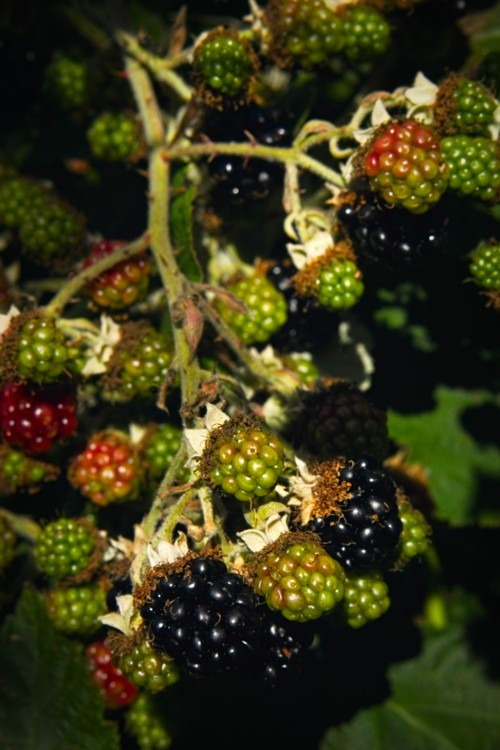
So many other berries are ripening, most of which I leave for wildlife: Oregon grape, saskatoon, red flowering currant, black hawthorn, goumi berries, salal berries…. Coming on strong are the first blackberries. The highbush cranberries are bright red but not ready until fall; native huckleberries are still small and green, as are the autumn olives.



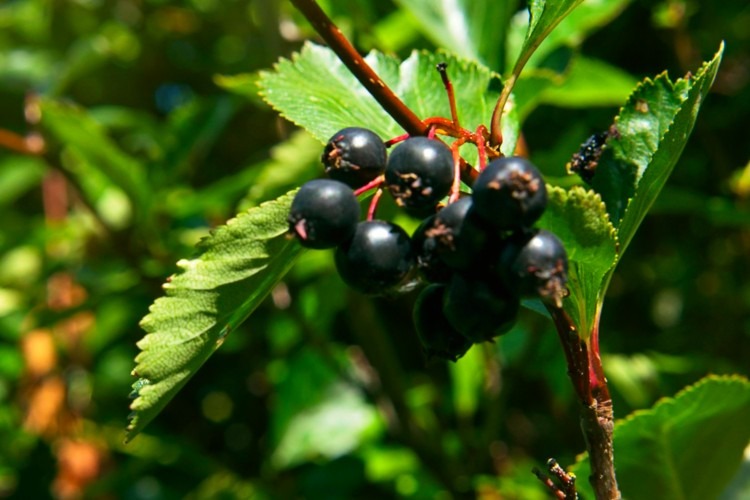


The Siberian pea tree is a fascinating shrub with long pods that when fully ripe, split apart in a spiral and eject the seeds to the ground.
I like this plant because it fixes nitrogen in the soil, does not require a lot of water, and provides food for wildlife.

July Flowers: Abundant, Tall, and Bold
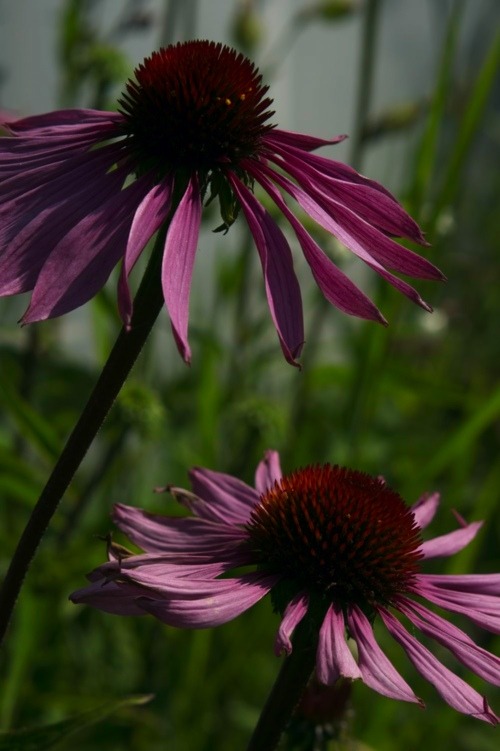
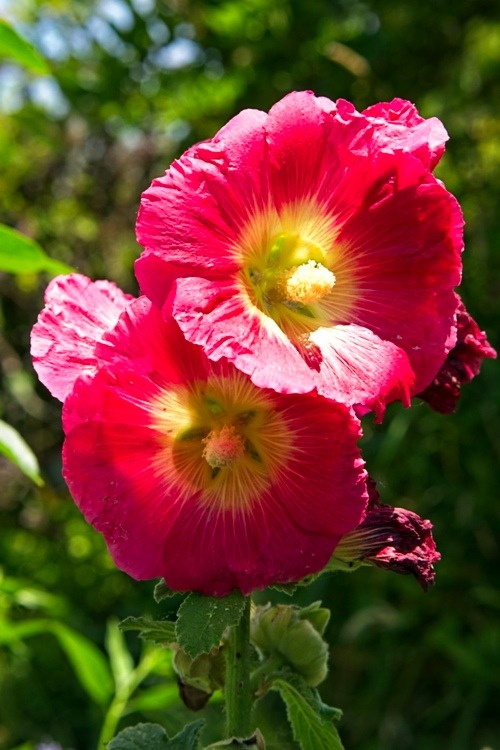
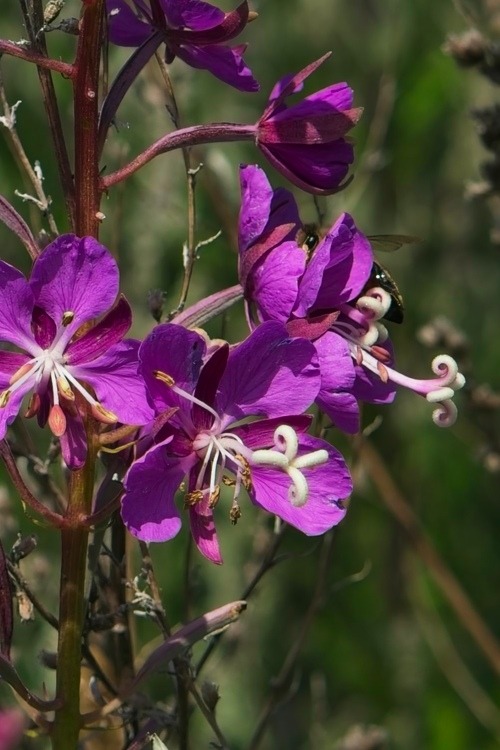
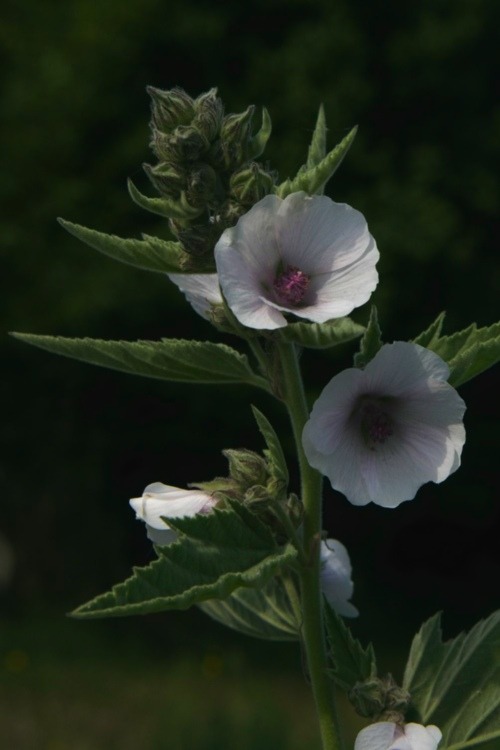
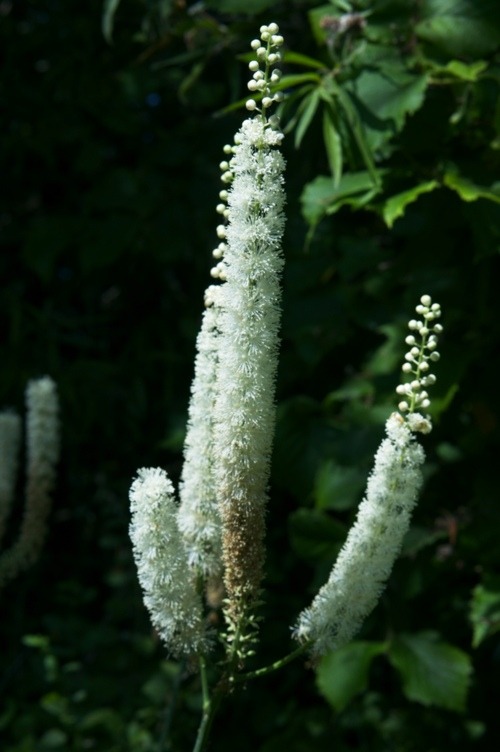
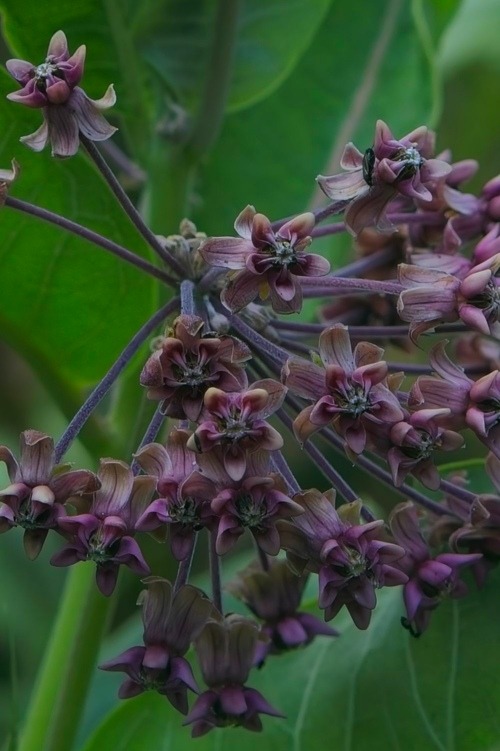
While early spring is all about the ground-huggers – dandelions, clovers, and daffodils –July is full of splash! Hollyhocks, Joe Pye, elecampane, spirea, deep red bergamot, black cohosh, butterfly bush, climbing roses, crocosmia – we see not just a blackberry or two, but a whole hedgerow of them – not just a bindweed trumpet here and there, but a cascade of them climbing up and over shrubs. Hummingbirds zip from one flower to the next, and the lavender literally vibrates with bees.

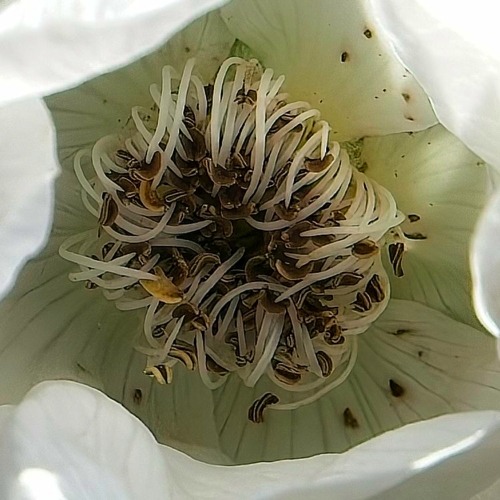


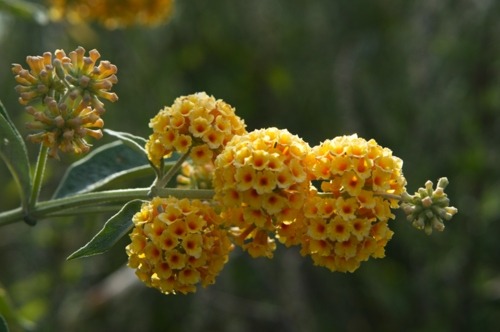
Did I mention abundant? So many! I can’t decide which photos not to include! They are all so beautiful!


Birds
I admit, I have a soft spot for hummingbirds – but I hardly ever capture them.
They absolutely *love* the Crocosmia / Montbretia!
They still frequent the hummingbird feeder, but prefer flowers when available.
I also keep several water stations available. Dripping water is a huge bird attractant. Something about the soothing sound of falling water… I think we all love it.

The seed eaters balance on tall stems, picking fresh seed from flowerheads and grasses (one more reason to embrace a messy garden). No need to fill the feeders as often — food is plentiful.
We still see a lot of finches – the bright yellow goldfinches and the rosy red housefinches are always fun. A female grosbeak is a frequent visitor; she appears large next to the little pine siskins. And, of course, the little chickadees.
Three peacocks (2 males and the younger female) are still coming around but not dominating the area. (Big Mama has not been here since several days after the tragedy in June.) They still roost in the nearby trees and call to one another across the fields in the wee hours. I created a page to tell the tale of our adventures with peacocks over the years, which I am sure will continue.

Crows came in rowdy flocks, followed by swarms of starlings to pick the cherry trees clean.


The Bucks Stop Here
The Buck Moon is true to its name. The young bucks are frequent visitors. They come right up to our tent and are curious, but wary. They blend in with the tall grasses, now turning the golden brown of mid-summer.
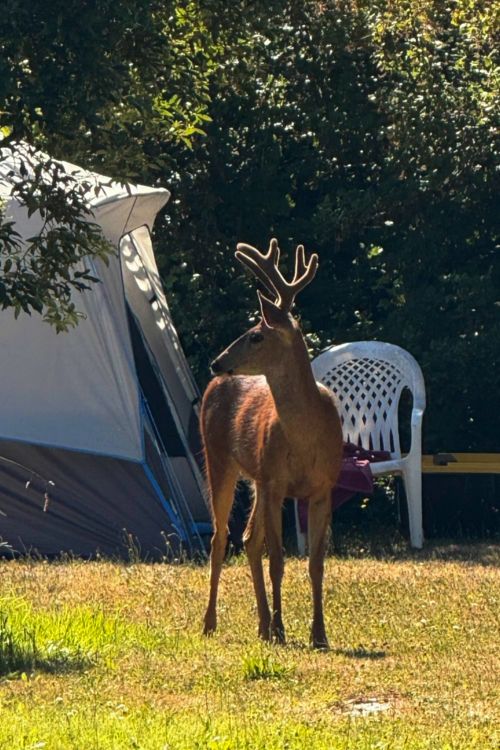

Oh, sheesh. There are four of these brothers scoping out the ‘hood. All sporting velvet. Watching me watching them. All, I am sure, want to get into the willows and the orchard to rub their antlers against the trunks and leave their scent. The place just reeks of testosterone.
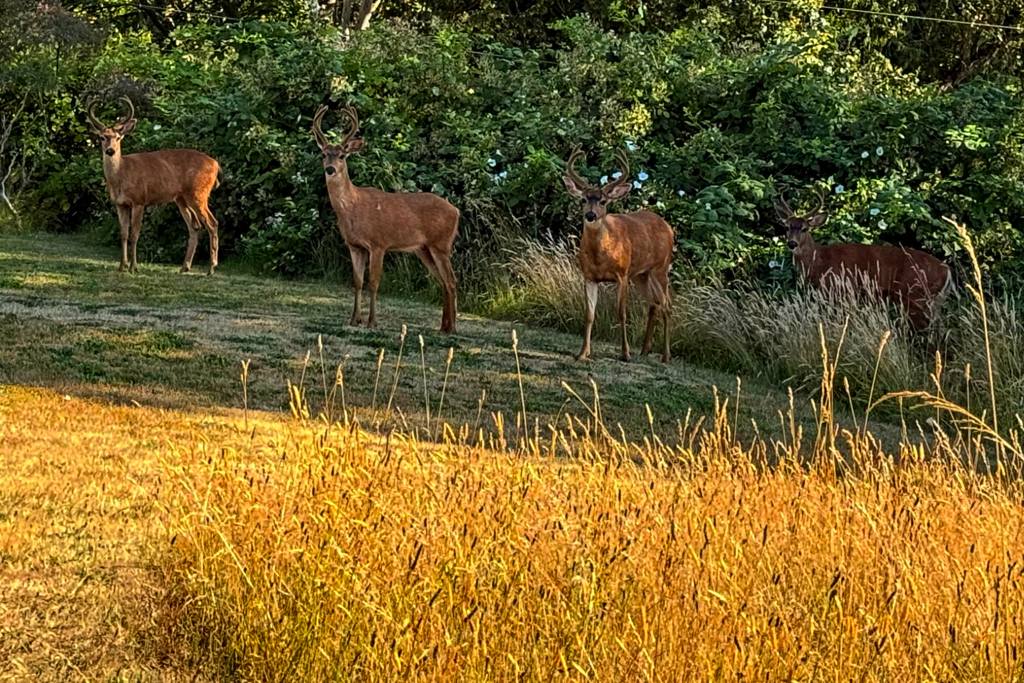
A young doe bounded across the road into the orchard. I tilted my head to the west; “They are back there,” I said. Handsome fellas.
A Midsummer Night’s Dream
It is now midsummer – and the grasses are turning golden in the evening sun. The days are noticeably shorter. The sky is hazy, the sunsets dramatic, and the moon orange from the fires. We hold tight to this oasis.
July is certainly a month of abundant abundance. The veggies are plentiful at the Farmers Markets and farmstands. We are so very grateful for these hardworking farmers who add so much resilience and health to our community.
July Overwhelm … True Confession
And yet – it can all be a bit overwhelming. I would like to think I am increasing the biodiversity in our “yard” – which, at about 2 acres, can be a lot to manage – but there are a lot of times I feel that all I am doing is fighting the invasives (I am looking at you, bindweed, grasses, and thistles).
I mean, there might be other things I want to do in life. Play with grandchildren, for example – make art and music, hike and travel.
My initial goal was to set it up and let nature take care of itself. However, I find I have created more, not less, work for myself – more than my 73-year-old body can handle. I have come to the realization that I cannot make – or afford to buy – or have the strength to distribute – enough compost and mulch. I will never “win” a war with bindweed unless I nuke the place and walk away – in which case, everyone loses.
It is easy to get a bit discouraged at this time of year while the race is on to make the most of summer.
My test for August ….
…will be to see what survives with my neglect, which I predict will mean more native plants in the future. It might not be the permaculture arboretum I once envisioned – and that is ok.
I am reminded of several principles in permaculture: observe, interact, adjust, adapt. Value diversity – of course – and also self-regulate and accept feedback (sometimes harder).
Lessons learned:
- Start small. This was the lesson I did not follow – and it is an important one. I jumped in with both feet, a shovel, and a pitchfork.
- Know your invasives and be proactive. An ounce of prevention…. This land was covered with thistles and quack grass and nettles. I can live with the nettles. The others, not so much. And the bindweed…. Hmm, I notice it does not grow in the shade beneath the hazelnut trees.
- Be grateful for everything – even the invasives that make me stronger.
So …In abundant gratitude –
…for all we have and for those who continue to check in and maybe even read to the very end…. Thank you.
Remember to …
Provide water for insects, birds, and the passing thirsty ones in the days ahead,
If you are in the back country, prevent forest fires!
Support your local farmer,
And Mulch the World.
Xox
Blythe
~ * ~