And All the Wind and Rain…
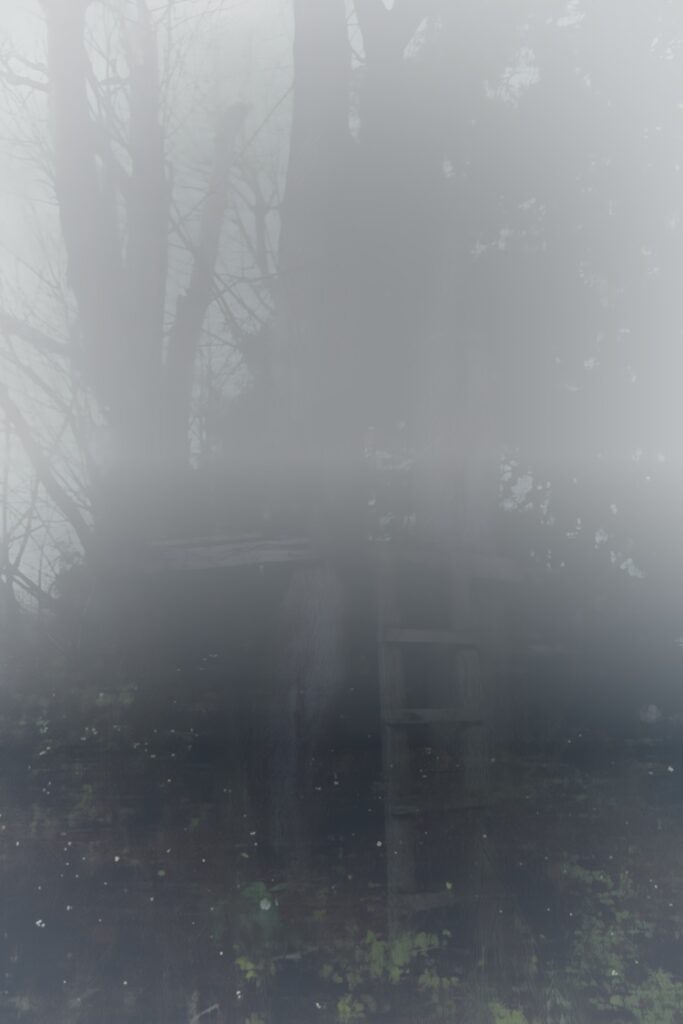
November — that time of year when the clouds have a way of sinking to the ground and just hovering there, and you look around and realize you’re walking in a fog.
Sometimes I wonder if this is common with people my age. Perhaps.
And yet, the magical thing about fog is that with every step, the next reveals itself – the next patch of ground- the next path forward. We find that we cannot always see far ahead, but living in the moment can be quite revealing.
The garden loves the fog — plants soak it up, bathing in its cool moisture, condensing vapor into droplets that fall as nutrient-enhanced rain to the earth below and to all its millions of inhabitants.
I come along and step on them. (Sorry.)
The earth is soft and compresses sponge-like beneath my feet, as do all the tiny organisms within. Perhaps my footprint will fill with water and provide a drink for birds, insects, and small mammals that follow in my footsteps. Life carries on.
We are often straddled between the visible and the invisible — the seen and the unseen.
When the edges of our world are a bit blurred, perhaps we are more able to see the possibilities – and then as they become more defined, the opportunities. Perhaps the clearly defined can become a bit too rigid?
Foggy edges shift with changes—they flow, adjust, soften.
(and yes, I used a filter on my photo for special effects because I did not have a decent photo of fog, elusive as it prefers to be! Perhaps I will attempt a watercolor of two feet standing beneath a fog layer…)
But November, on that cusp of winter, has many personalities

There are also days so bright and crisp and clear — the kind of day when every edge and vein of every leaf is sharply defined and certain plants seem to boldly jump out in front of you when the light hits them just right. I have to stop in my tracks. Can this really be November? And without realizing it, I find myself humming a little something cheerful.
November can be many things, true, but around here, it mostly leans toward drizzle.
It’s that ether world between fog and rain – not quite either one – that makes you want to inhale deeply. I love it.
Statistically, we can get more rain in the month of November than we’ve had in the previous six. When we get over 1/2 inch of rain in one day (like we did on 11/14), it’s kind of a big deal for us (Snow in the mountains! Yay!) Yet, just 1.5 hrs away in Forks, WA (land of the soggy vampires for Twilight fans), the earth can receive 5 times as much or more—the kind of rain that topples trees and creates mudslides and road washouts. People out there are accustomed to being cut off from the rest of the world…and for many, that is why they are there.
November brings the winds of change — sometimes nearly 50 mph. It can get a little crazy out there.
We need these winds
to bring down the leaves
to cover the soil
to protect the insects and roots
so the seeds can come back up in the spring.
We see the wind by what it moves. The leaves swirl in one final dance until the ground is carpeted with red, orange, yellow, rust, and brown. We rake them into huge mounds, pile them under shrubs and trees, stand back and watch the wind blow, and then do it all over again.
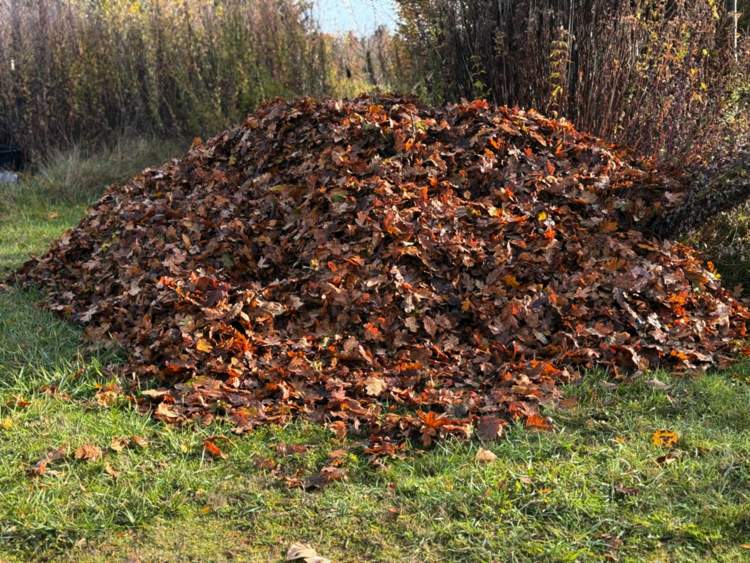
The mulch won’t kill the bindweed, but it Will give creatures a place to survive the winter and, over time, build the soil.
We are entering December, and the trees are almost naked now. Nature is telling us we need to rest. But there is still so much to do!
Fall and Fallen Fruits

Apples, of course – we are inundated – I am making apple sauce, apple butter, dried apple chips, apple muffins, German apple pancakes, and hot apple pies – calling friends and neighbors to pick all they want, but apparently they are as overwhelmed as I am.
And take a look at these medlars! Such a peculiar fruit – and a peculiar tree that has grown in awkward directions because of encroaching growth from all sides: a very large bay tree, American highbush cranberries, wandering bamboo, and, of course, bindweed. In spite of all this, it has found ways to reach the light and produce massive amounts of fruit. I fill a bucket to magically transform into vinegar, pick some for fresh eating, and a few more for a little jam spread. There are still plenty for the birds.
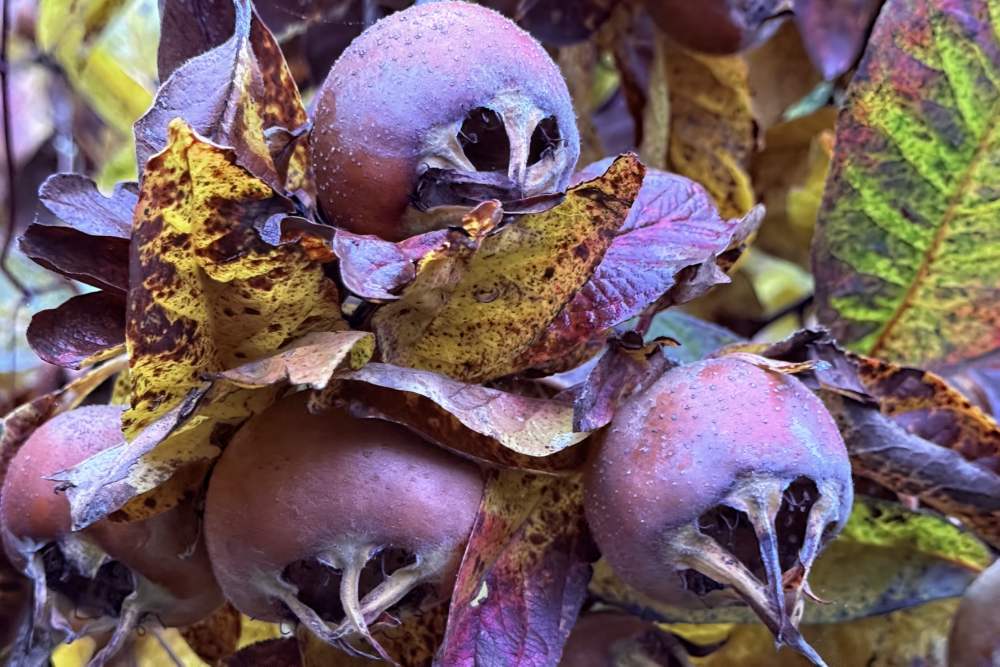
“Uncommon fruits” are uncommon for a reason, I now realize. The horticultural experiment continues…
Isn’t it interesting how so many November fruits are such a deep red? Is it so birds and other animals can find them in the snow?

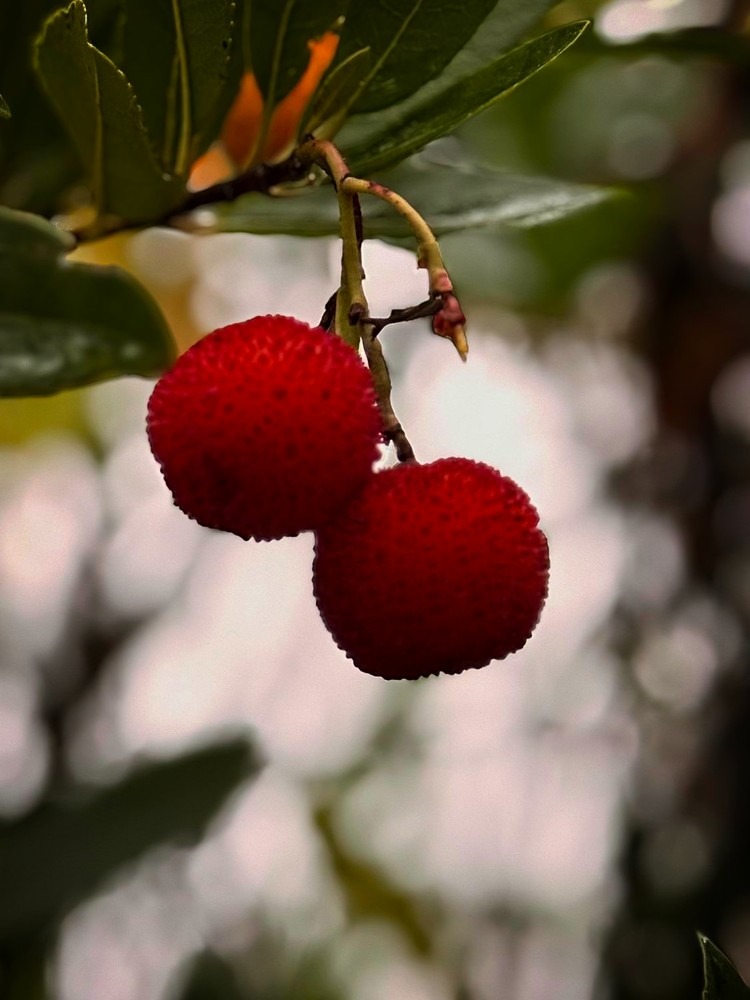
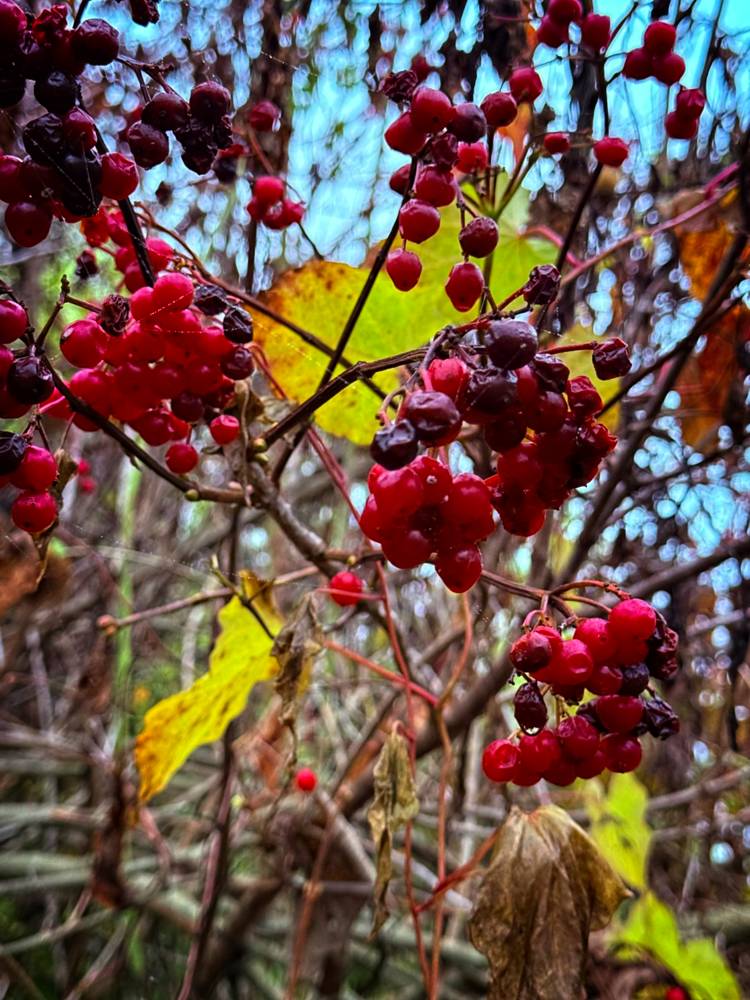
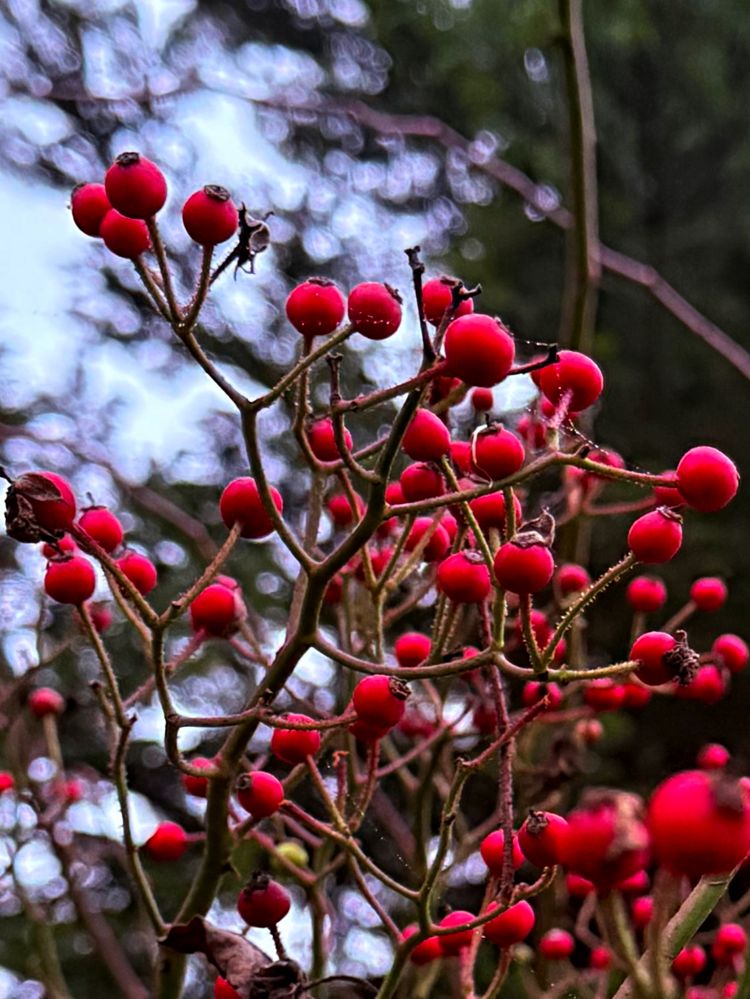
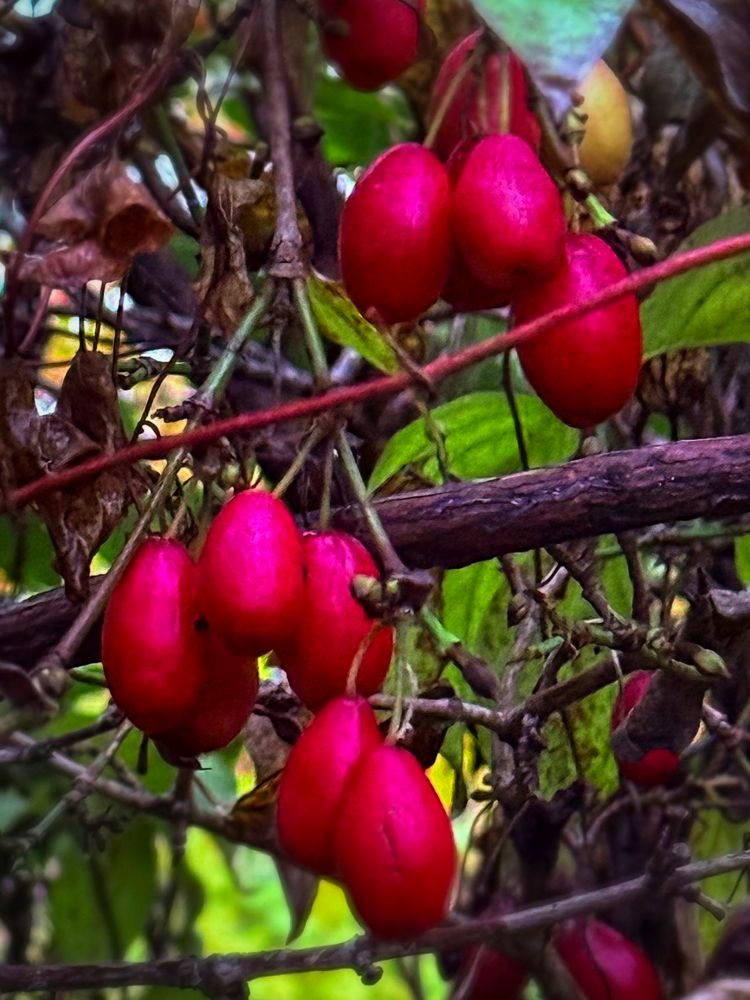
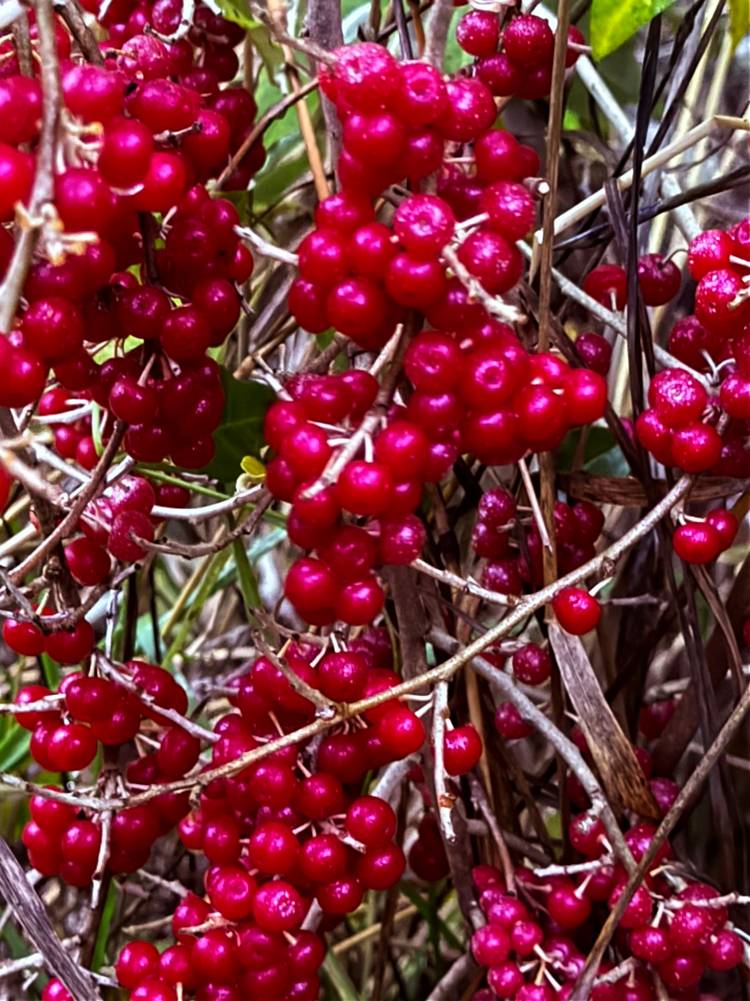
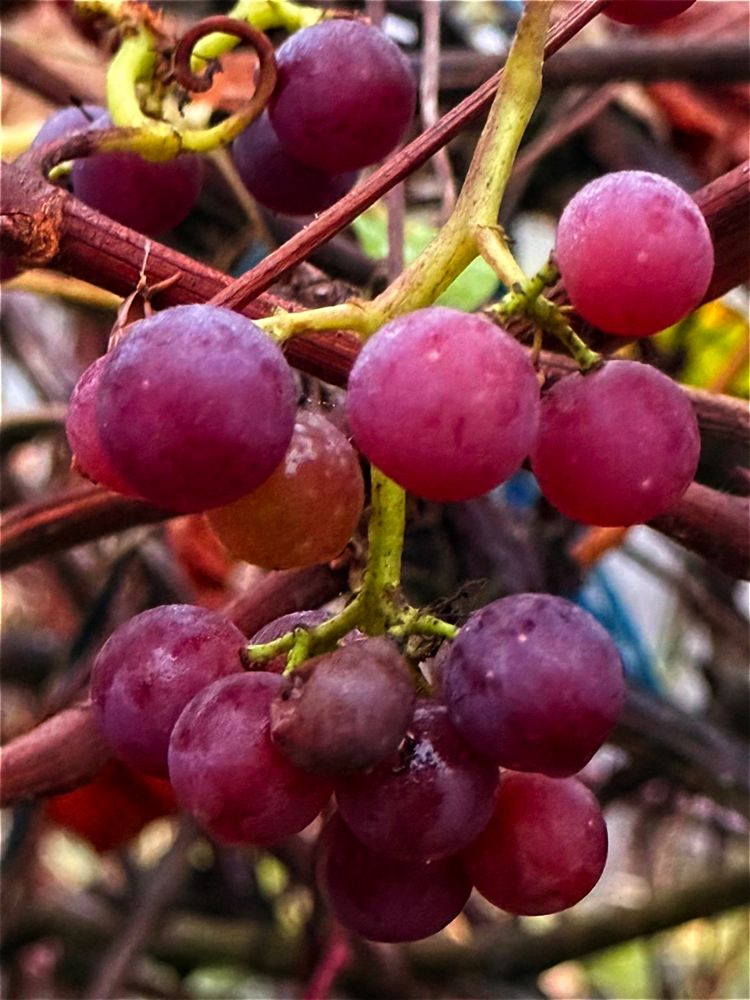
I am surprised to find grapes and raspberries so late in the year… but sure, I’ll take them!

Admittedly, ours is not a market garden – and the diversity of what’s out there attracts a lot of wildlife, and for me, a life a bit more wild. I am redefining what that means as I age.

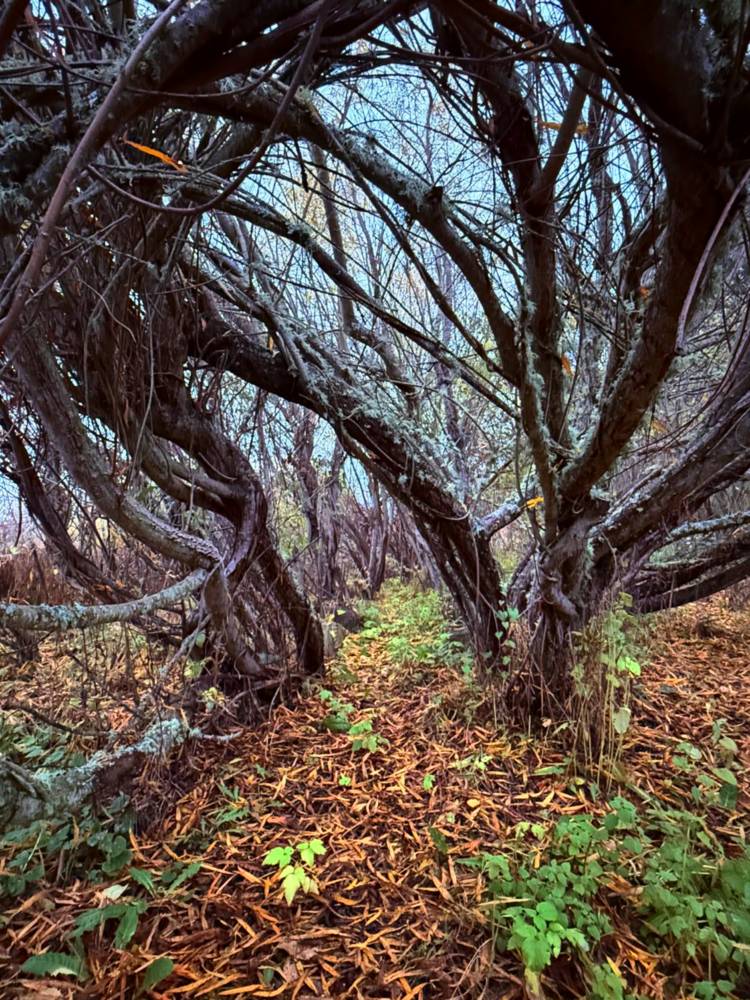
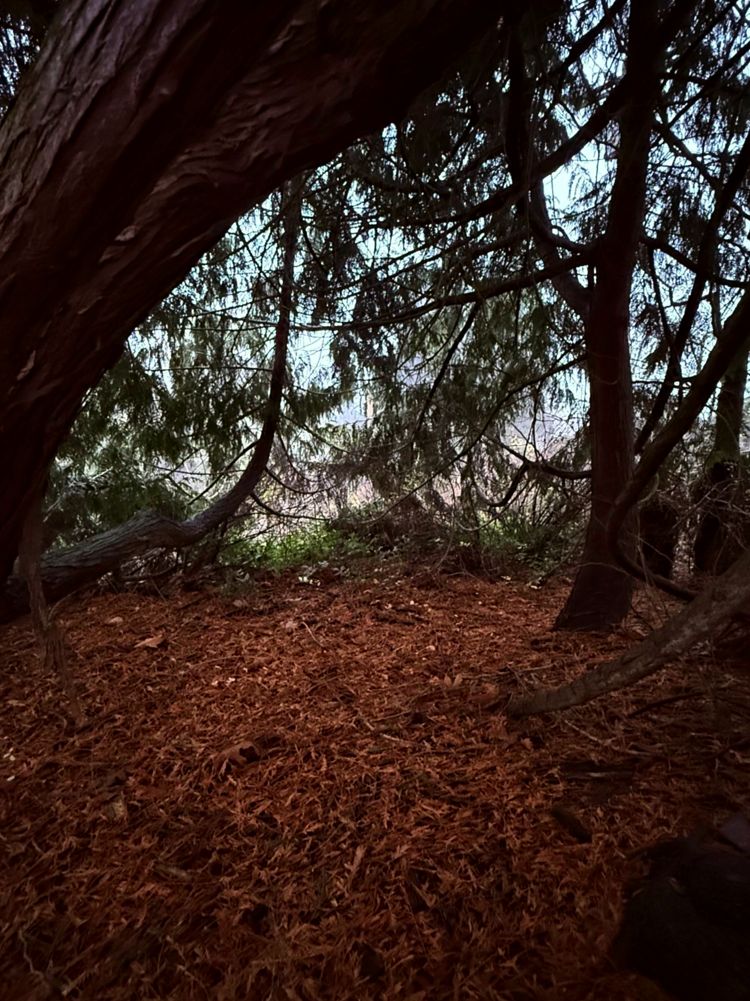
In the past, I planted a lot of “useful” plants (however that be defined), many of which I had read about in permaculture books. I focused on building diversity, connections, and multi-functions – but they were not necessarily “native” to where we live. Fifteen years later, they have, indeed, enriched the landscape. I am inspired, however, to plant more natives — i.e., plants that have evolved alongside regional pollinators and birds. Together, I think they support a resilient landscape that I’m hoping will adapt to changing conditions.
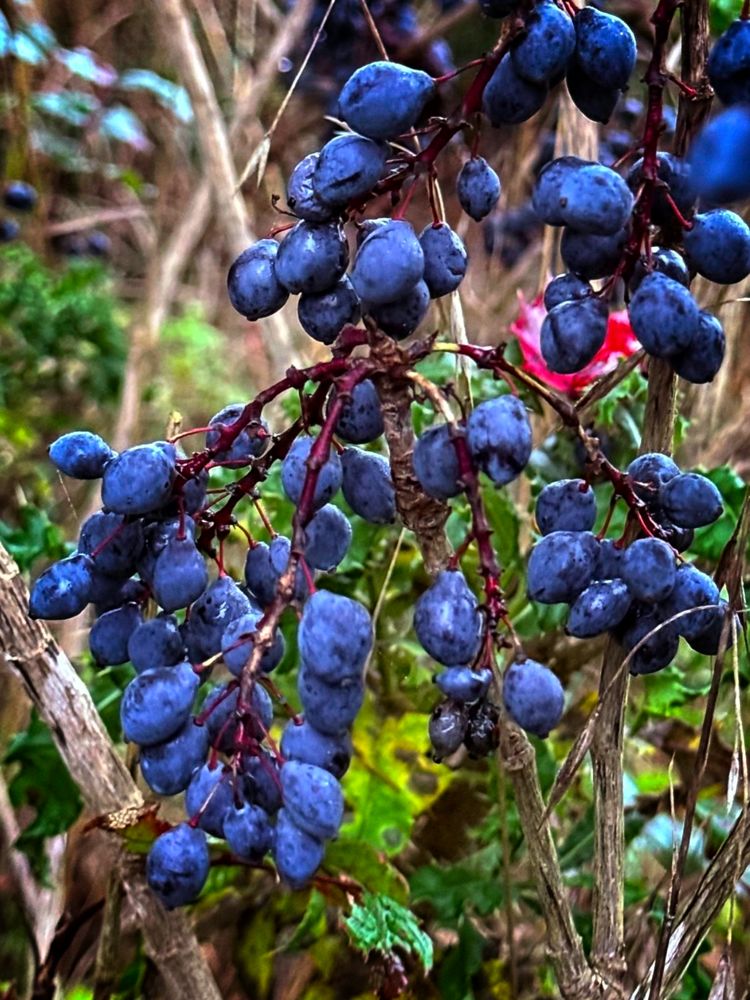
A few native plants currently fruiting…
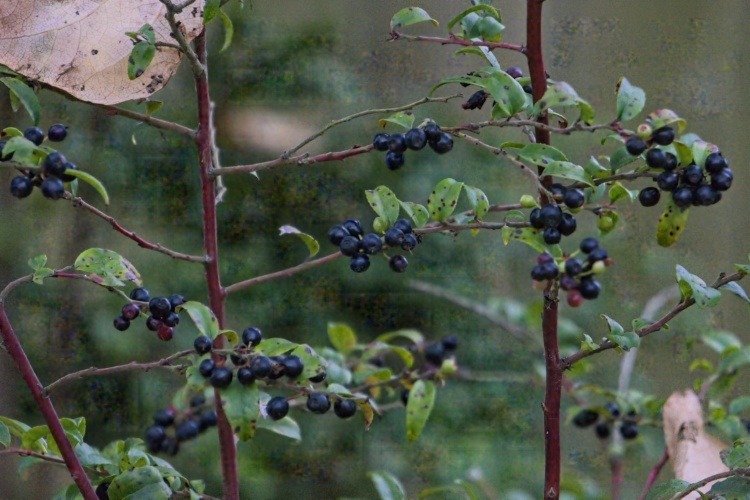

Bird Life Returns to the Feeders
Welcome back, little birds! (if, indeed, you ever left) – juncos, chickadees, finches, sparrows, towhees, and their ilk. The Steller’s jays keep watch and swoop in for peanuts and suet. They choose the heaviest peanut by picking each one up and putting it back down before deciding which to take.
The bushtits might be here all year round, but now I am seeing them once again clustered on the suet blocks. These amazing little acrobats no bigger than a hummingbird but much fluffier, are great at finding the tiny insects (like aphids) that other birds might overlook. I am glad they are here.
The quail, too, find shelter in the bordering blackberry hedges and forage in adjacent fields over the summer, but appreciate the extra seed near the house during the colder months. They have created a trail that follows the edges of the field and, with one male on a post keeping watch and signaling when everything is clear, they trot together toward the feeeders, always on the lookout for where to scatter and hide in the underbrush if startled.
A few backyard feeder friends….
(click to enlarge photos)
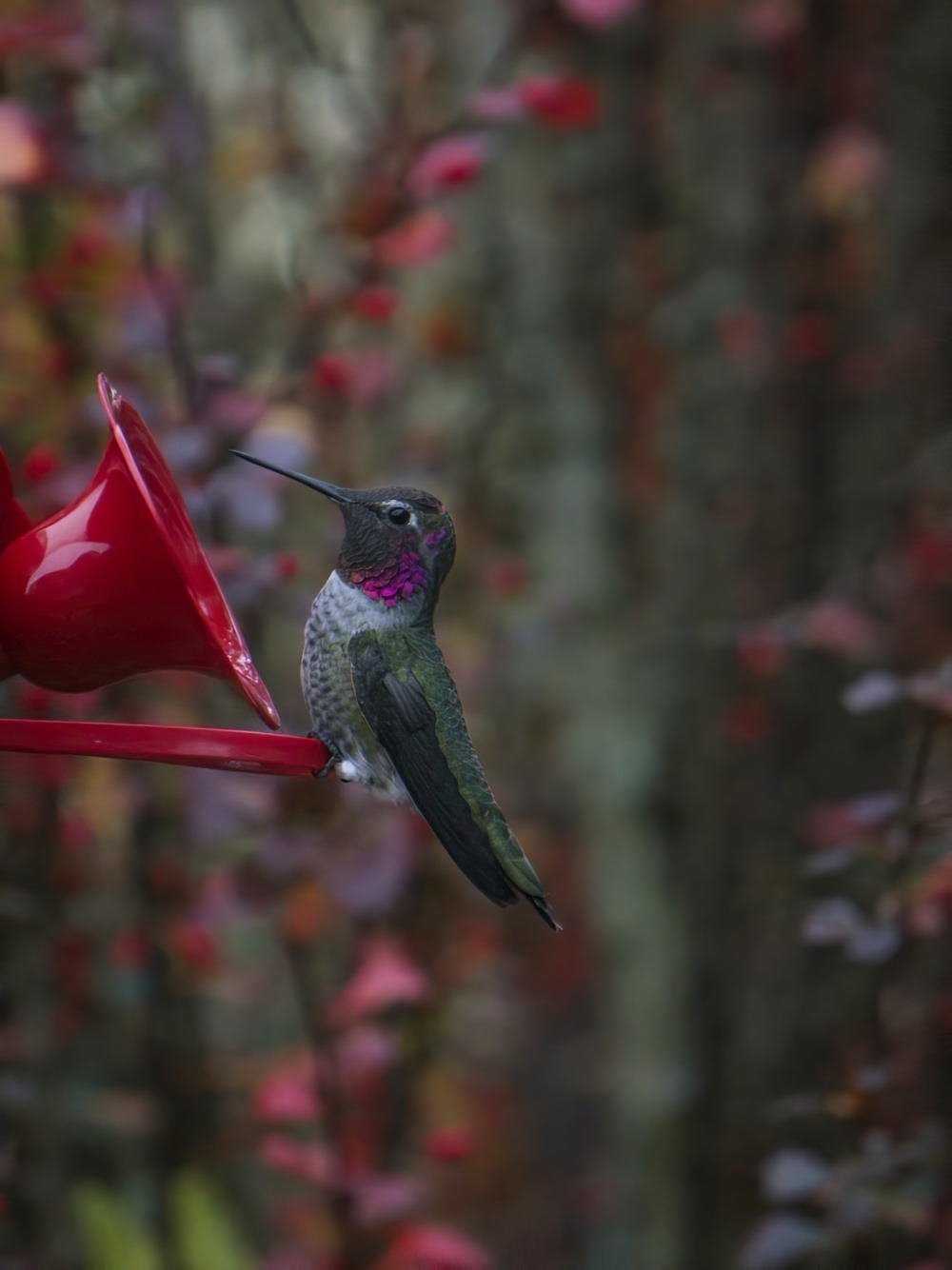
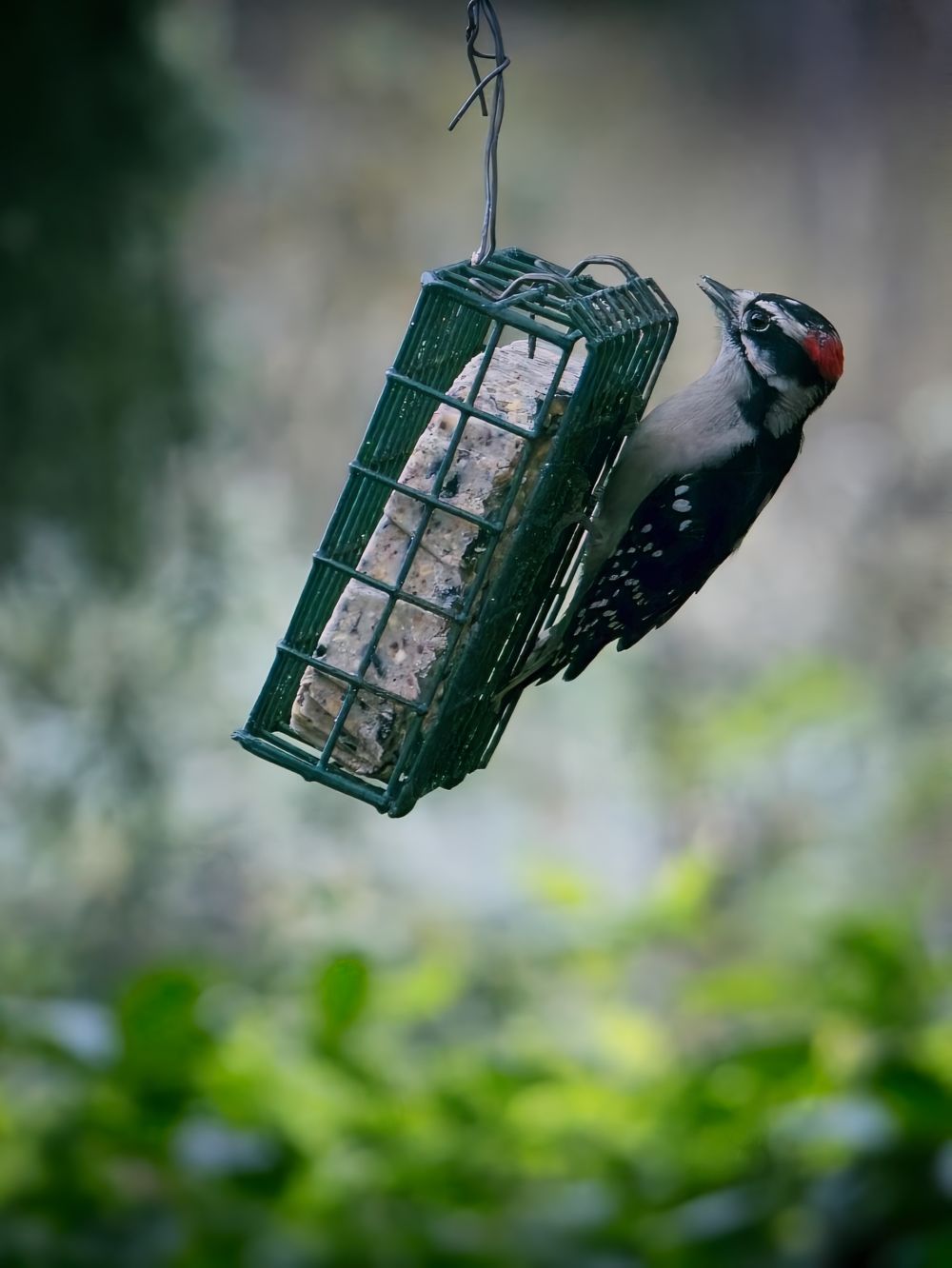

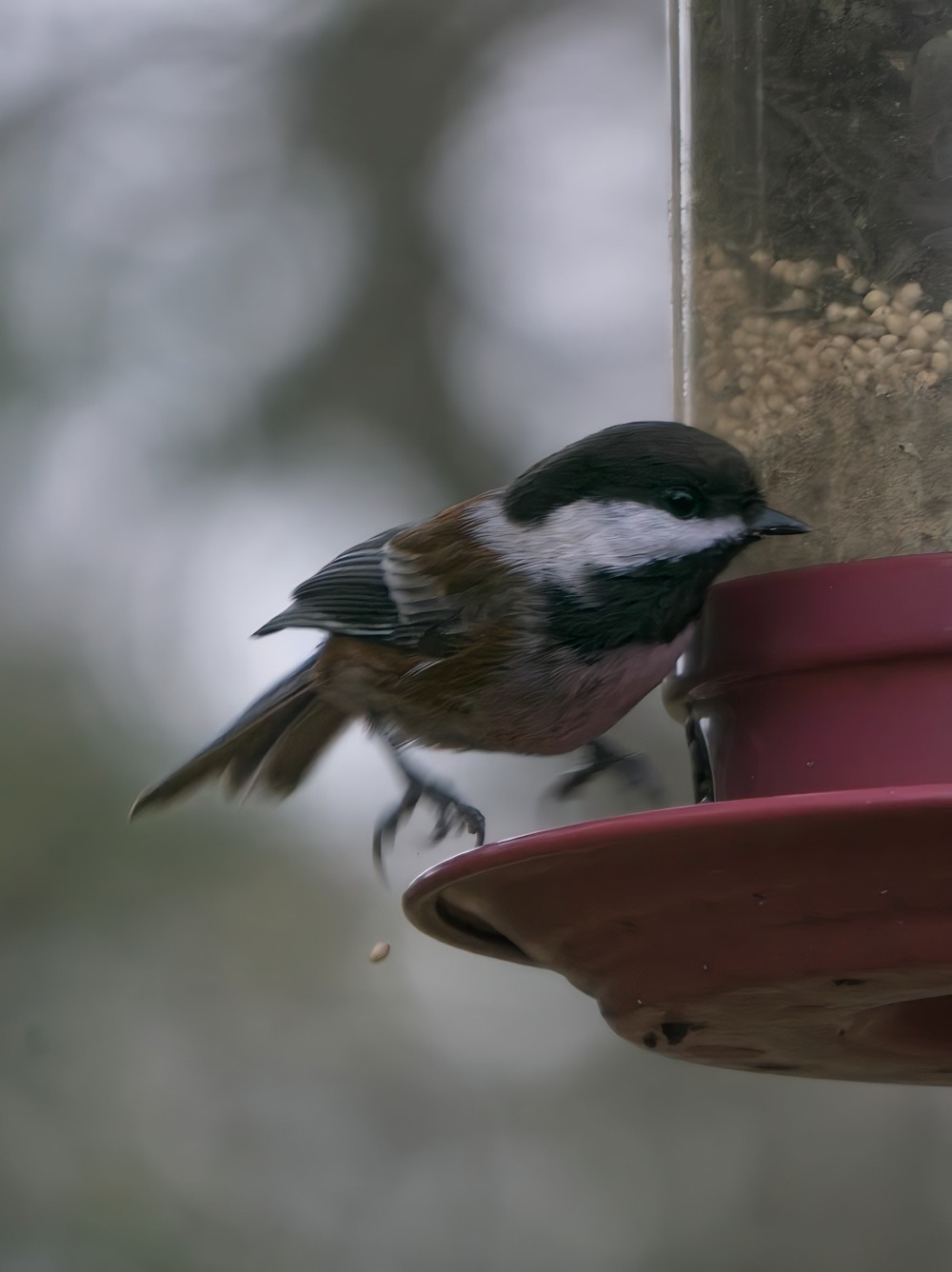

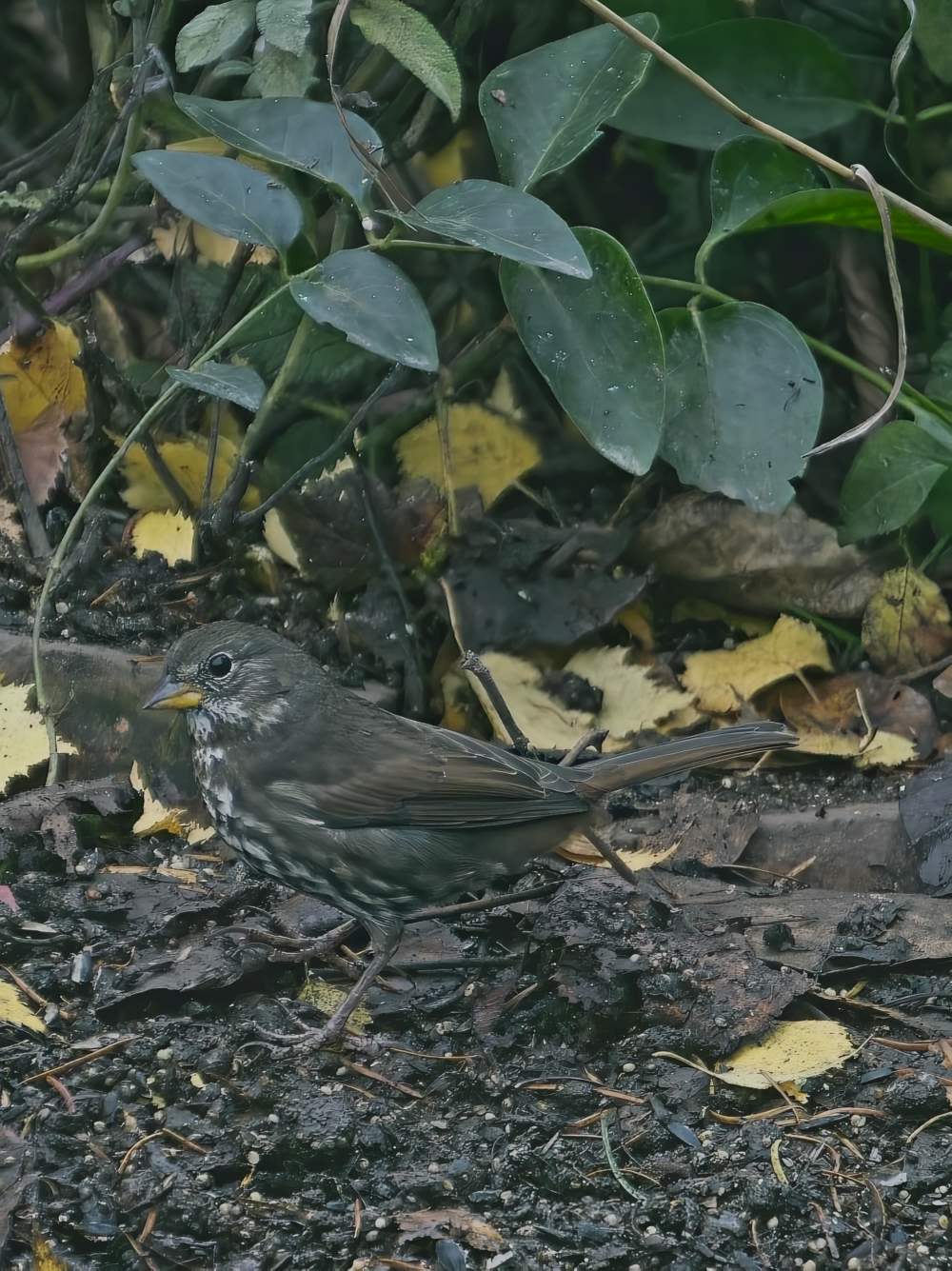
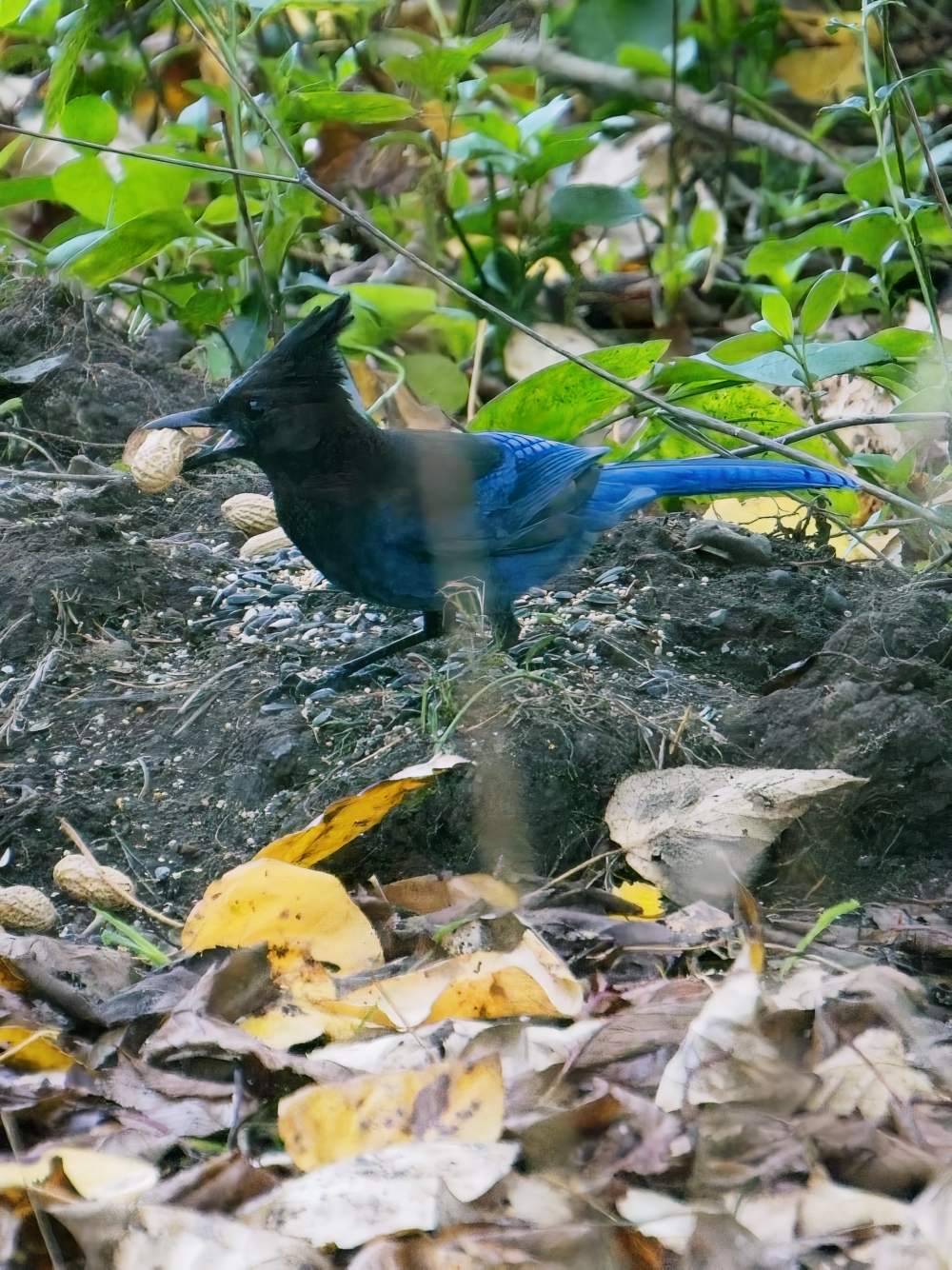

The cat watches all from inside her cage. She can sit there and watch them for hours. (As can I.)
The birds seem to know she is not a threat, but she keeps very very still, just in case they venture inside the enclosure. We added smaller mesh on top of the 2”x3” fencing around her “catio”to prevent any carnage.
The Cornell Lab of Ornithology estimates that domestic cats kill about 1.3 to 4 billion birds every year. They also kill an estimated 6.3 to 22.3 billion small animals. Billions! Incredible numbers! Consider – Americans own a total of about 50 million cats that are allowed outside, and there are possibly twice that many more that are feral, give or take a few. I’m not sure how they came up with these wide-ranging estimates, but no matter how you count them, it’s a human-caused problem, and it’s a lot. But I am getting sidetracked…. and we still love our rescued kitty.

But the Days Are Still Getting Shorter
The sky gets dark by 5 pm and it is getting cold. Hoses are put away; tender plants are moved into the greenhouse. We used some pipe-insulating tubes to block the gaps between the roof and the walls in the greenhouse, which should help keep it a bit warmer – but I do not heat it during winter, so plants must be able to withstand freezing temperatures. Things grow slowly now and everything gets ready to hunker down.
And still – there is so much abundance!
November is, indeed, a time to be particularly grateful.
Thank you.

(Thanks for visiting! Hope you had many things to be grateful for this November! Wishing you all the best!)
~ * ~
I love your blog so much, Blythe! Thank you for the inspiration and tips. I tried the sautéed sage–delicious on top of my hot bowl of soup! ~Getta
PS-The email I included is my new one, though I still check my old email address occasionally. 🙂
This makes me happy, Getta 😀 I am really glad you like it. And thanks for reminding me — I need to go out and harvest more sage before it gets really cold. (PS – Fixed the email. Thx!)